
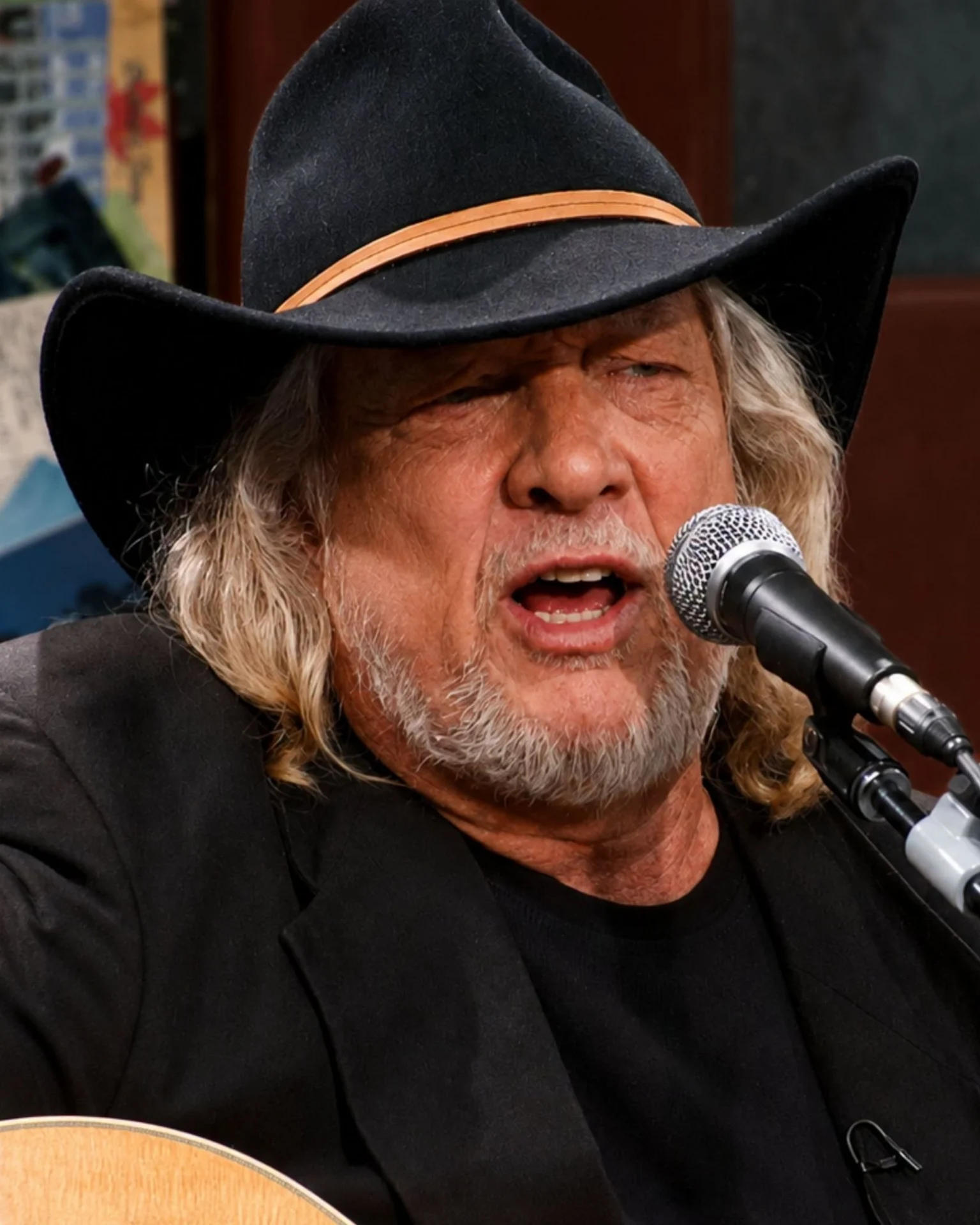
Years after looking down from the roof at the hole where the stage would be, John Anderson stood on that finished Grand Ole Opry stage as a country star, completing one of the most poetic apprenticeships in country music history.
He came to Nashville to sing and first helped build the room where he would one day perform.
John Anderson arrived in Nashville in 1972 with little more than an obsession with traditional country. Raised in Florida, he had first listened to rock before discovering Merle Haggard and George Jones.
That harder sound changed his direction, and at seventeen he headed for Nashville hoping to become a singer.
A Construction Job Instead Of A Record Deal
Nashville did not immediately need another singer. It did need construction workers.
Anderson found work on the new Grand Ole Opry House, then being built near Opryland. He later recalled working on the roof and looking down at the unfinished space where the stage would eventually stand.
At night he played clubs and honky tonks around Lower Broadway, absorbing the older country he loved. Lefty Frizzell became an especially deep influence on his phrasing.
A Long Apprenticeship Pays Off
The apprenticeship lasted years. Warner Bros. signed Anderson in 1977. His early singles charted, but the real breakthrough came with “1959” which reached the country Top 10 in 1980.
“Chicken Truck” followed, helping distinguish his traditional sound from the smoother country pop dominating radio. Then came “Wild and Blue” and it reached No. 1 in 1982.
The next year Anderson and Lionel Delmore turned a phrase from a Miami shopping mall commercial into “Swingin’.” The song became Anderson’s biggest hit, reaching No. 1 country and crossing onto the pop chart. The CMA named it Single of the Year while Anderson won the Horizon Award.
By then the teenager who had once worked above the unfinished Opry stage was appearing there as a country star.
The Sound He Never Abandoned Came Back Around
But the story did not end with the early 1980s peak. After his chart momentum faded Anderson returned in 1992 with “Straight Tequila Night” another No. 1.
By then Randy Travis, George Strait and the traditional revival had helped move country radio back toward the sound Anderson had never really abandoned. The Grand Ole Opry House he helped build opened in 1974, and John Anderson’s career lasted long enough to watch country music change around that building and eventually come back toward the kind of music he had arrived in Nashville to sing.