
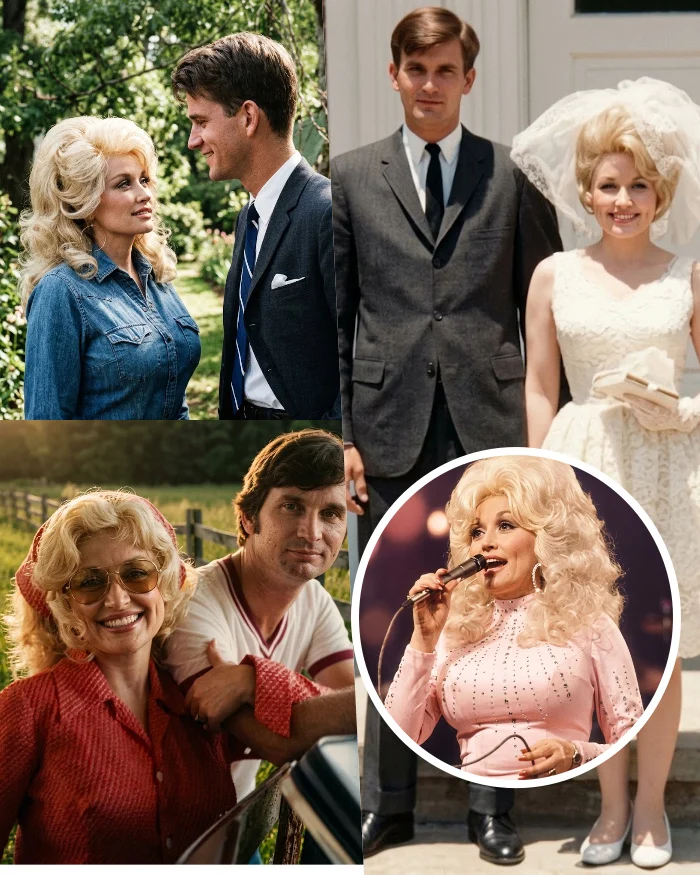
On a quiet Memorial Day in 1966, a white pickup truck rolled south from Tennessee with a twenty-year-old singer and the man she refused to lose. Dolly Parton and Carl Dean were not heading toward a Nashville chapel filled with reporters. They were heading toward Ringgold, Georgia, nearly two hundred miles away, where a marriage license could stay out of the Music Row spotlight.
That drive answered a warning Parton had heard only weeks earlier. In spring 1966 she sat in a Nashville office with Monument Records founder Fred Foster. The label had just signed her and was investing heavily in her first releases. Foster’s instruction was firm. Postpone the wedding for at least a year. Executives believed an unmarried image sold records while a young wife risked losing radio momentum before her career had truly begun.
Parton listened politely, stepped out of the office and made a different choice
She had met Dean two years earlier outside the Wishy Washy Laundromat on 16th Avenue South. It was the very afternoon she arrived from Sevierville. Dean worked in asphalt paving, and he had no appetite for show business. Parton understood that surrendering the man who believed in her before Nashville knew her name was a price she would not pay.
On May 30, 1966, Dean brought his pickup to the curb. The couple crossed into Georgia and reached Ringgold, a small border town where local marriage filings were not syndicated to Tennessee trade papers or entertainment columns. There were no bridesmaids, no industry executives and no photographers waiting outside.
Parton’s mother, Avie Lee Owens, had sewn a short white lace dress by hand in the Great Smoky Mountains. Inside Ringgold First Baptist Church, Pastor Don Duvall and his wife stood with Avie Lee as the only witnesses. Parton and Dean exchanged modest rings bought with saved cash, spoke their vows quietly and walked back into the Georgia sun as husband and wife.
There was no champagne and no catered reception. The newlyweds stopped for a simple roadside meal and then drove straight back to Tennessee. The ceremony stayed an industry secret for nearly a year, until Parton’s first major records proved that her talent could not be undermined by a wedding ring.
That secret elopement shaped the balance that carried Parton through six decades of fame. Dean stayed home while she conquered international stages. He built an asphalt paving company in Nashville and deliberately avoided red carpets, industry parties and television appearances. Parton moved through global tours, hit films and legendary honors, but the couple kept a strict line between public spectacle and private devotion.
Even her songwriting felt the shelter of that devotion. Dean became a quiet sounding board at home, hearing acoustic melodies long before studio bands tracked them. The marriage gave Parton an emotional security that never had to justify itself under stage lights.
In May 2016, fifty years after the Ringgold ceremony, Parton and Dean renewed their vows. This time Parton wore a lavish long white wedding gown with a veil, honoring the promise they had made without a crowd. Private photographs from the celebration were sold to raise money for children’s literacy charities, tying a personal milestone to generosity rather than vanity.
Music history often praises bold defiance inside recording studios. Parton’s most consequential stand may have happened on a two-lane highway heading toward Ringgold. By refusing to trade genuine love for commercial security, she protected the quiet room where she was always simply herself.