
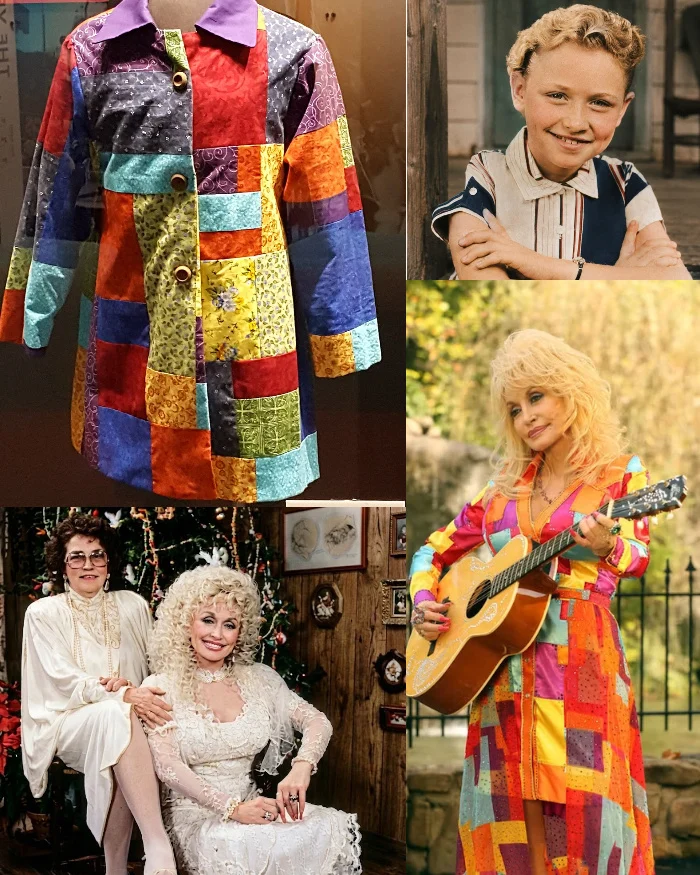
The coat closet door clicked shut on a little girl in the Great Smoky Mountains, but the love stitched into her patchwork coat would one day open a door to the world.
Deep in Sevier County Tennessee, the Parton family survived in a small crowded cabin where buying new winter clothes was a financial impossibility. When the bitter cold settled over the mountains, Avie Lee Parton gathered colorful fabric scraps that neighbors had given the family.
Sewing small pieces of corduroy by dim light, Avie Lee told young Dolly the biblical story of Joseph and his coat of many colors. She stitched spiritual weight into discarded rags and made the patchwork garment feel like a blessing rather than a symbol of rural poverty.
Dolly walked down the mountain and into her elementary school wearing the coat with absolute pride. She believed she was dressed in something magnificent. The reaction from other children was immediate and cruel.
Kids in proper store-bought clothes mocked the homemade patchwork. They cornered the young girl and locked her inside a tight school coat closet. Dolly cried in the dark space, yet she fiercely defended her mother’s work through the door.
She understood early that real wealth came from the love stitched into the fabric rather than a price tag
Years later in the fall of 1971, Dolly faced that painful schoolyard humiliation and turned the childhood memory into an autobiographical masterpiece. The transition from a mountain memory to a global anthem happened in a remarkably fleeting moment on the road.
While riding on a tour bus with country star Porter Wagoner, the melody and words rushed into Dolly’s mind. Unable to find a proper notepad in the moving vehicle, she grabbed the only paper available, one of Wagoner’s dry cleaning receipts, and hastily scribbled down the lyrics before they could fade.
Recognizing the weight of what she had just created, Wagoner later had that exact dry cleaning receipt framed. It was the physical birth certificate of a song that would soon transcend traditional country music.
When Dolly took the song into RCA Studio B in Nashville, the recording required very little embellishment. Released in October 1971, the track climbed the Billboard country charts and transformed a highly specific story of Appalachian survival into a universal message about human dignity.
The record proved that a mother’s love could shield a child from both the winter freeze and the cruelty of others. Yet while the song lived on forever on the radio, the original coat had long vanished, likely returning to the cycle of rags that birthed it.
As the song’s historical weight grew over the decades, the physical artifact was needed once again. Avie Lee Parton sat down years later to recreate the garment, sewing an exact replica stitch by stitch so her daughter’s story had a physical anchor.
That second coat eventually found a permanent home behind glass at the Chasing Rainbows Museum at Dollywood, allowing millions of fans to see a tangible representation of the music. It stands as a monument to the resilience of a family that had very little money but an abundance of pride.
The kids in that rural Tennessee schoolhouse could only see a jacket made of mismatched scraps. They could not have known that the girl locked in the closet would one day turn those rags into a permanent American standard.
Avie Lee Parton simply wanted to keep her daughter warm against the mountain winter. Instead she gave her the exact words she needed to warm the rest of the world.