
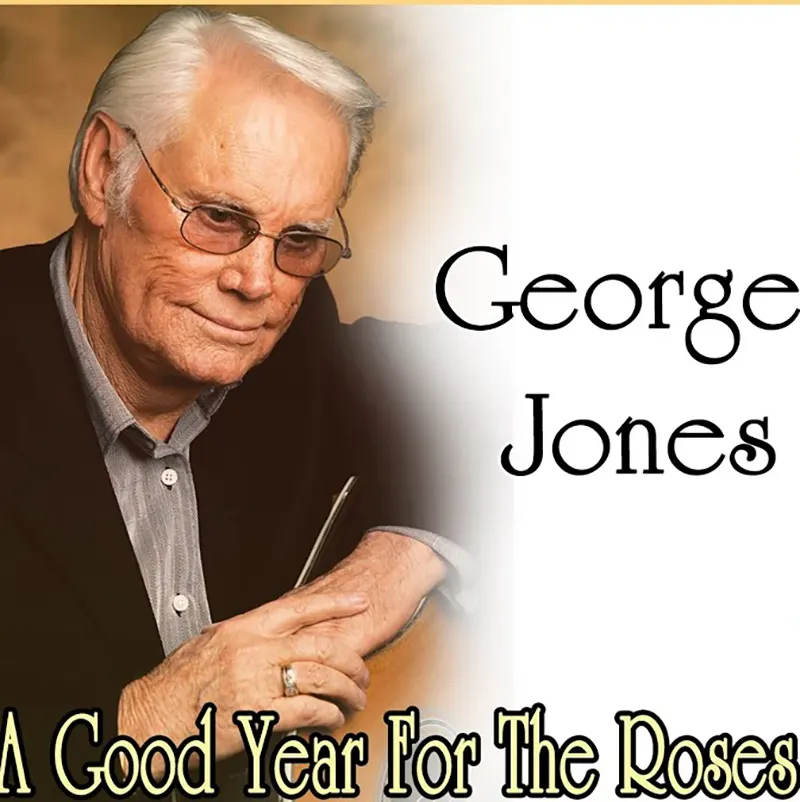
The door closes and the room goes quiet. A lipstick-stained cigarette lies cold in an ashtray. A half-filled cup of coffee sits untouched. Outside, roses are blooming, but inside, a marriage is ending. That stark domestic scene is the beating heart of George Jones’ “A Good Year for the Roses,” a country ballad that turns small details into a devastating portrait of lost love.
Released in 1970, the song became a career landmark for Jones and helped cement his place as a country music legend. Its power comes from restraint. Jones does not need grand gestures to convey heartbreak. He lets the lipstick on a cigarette, the coffee poured but not drunk, and the first unmade bed after three years of marriage do the emotional work.
“It’s been a good year for the roses / Many blooms still linger there / The lawn could stand another mowin’ / Funny, I don’t even care”
The chorus sharpens the contrast between the natural world and the narrator’s inner world. The roses are thriving. The lawn is growing. The singer notices these things, yet he cannot care. When the door closes behind the woman he loves, the only words he can find are about the roses.
Jones’ vocal carries the weight of that numbness. The song’s narrator hears a million thoughts racing through his mind, but he cannot speak a word. From the bedroom, the couple’s baby cries, and the sound goes unheard. The silence is not peaceful. It is the silence of a home coming apart.
That is why “A Good Year for the Roses” still resonates. It captures heartbreak in the ordinary objects left behind. It finds grief in an ashtray, a coffee cup, and a garden that keeps blooming while love fades. George Jones made the song a timeless country classic by letting the smallest details say what the heart cannot.