
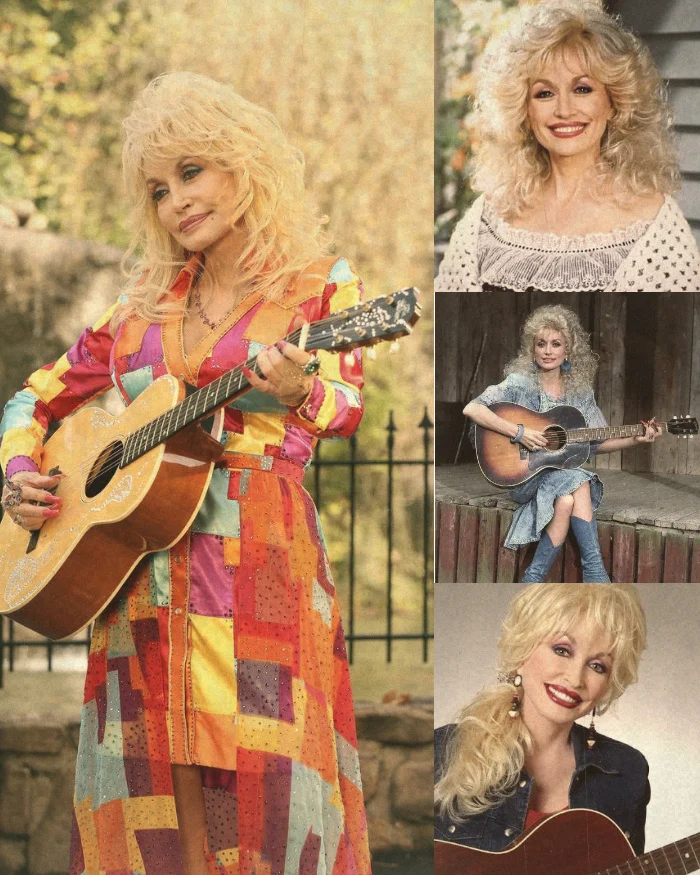
Behind glass at Dollywood sits a patchwork jacket that once made a little girl a target in a rural schoolyard. Decades later, that same scrap-built coat became the emotional core of the song Dolly Parton calls her proudest composition.
For more than half a century Parton has performed in custom rhinestones and heavy beaded gowns. Yet the most valuable garment she ever wore came from a box of discarded scraps.
The garment began in a drafty cabin near the Little Pigeon River in the Smoky Mountains. Parton’s family navigated the hard rural poverty of East Tennessee, where a large household had no money for winter clothes. When a box of donated corduroy rags arrived, Avie Lee Parton cleaned the mismatched pieces and hand-sewed them into a warm jacket for her daughter.
As she worked, Avie Lee told the biblical story of Joseph and his coat of many colors. The tale was meant to frame the patchwork garment as a blessing rather than a glaring sign of poverty.
At home the message held. At school it collided with cruelty. Classmates mocked the homemade coat without mercy. The young girl did not break down or hide. She stood her ground and tried to explain that the love stitched into every scrap made her richer than her tormentors.
She tried to explain that the care woven into those scraps made her far richer than any of them.
Years later, during a grueling 1969 tour, the memory returned on a bus with her musical partner and boss Porter Wagoner. A melody and opening lines arrived, but she had no notebook. Desperate to catch the inspiration, she wrote the entire song on the back of a dry-cleaning receipt for one of Wagoner’s stage suits.
Released in early October 1971, “Coat of Many Colors” cut through the polished Nashville Sound of the era. The acoustic track reached the top ten on the country charts and resonated with rural listeners who had hidden their own frayed clothes. A specific family memory became a universal anthem for working-class dignity.
The song carried such personal weight that Wagoner eventually returned his share of the publishing rights directly to Parton before his death. In a notoriously cutthroat industry, it was a rare concession. Her mother’s story belonged entirely to her.
The original childhood coat was lost to time, worn out by a family that shared everything. Years into Parton’s superstar career, Avie Lee recreated the exact patchwork jacket for her daughter. That replica now sits protected behind glass in the Chasing Rainbows museum at Dollywood.
Parton has written an estimated three thousand songs and built an unmatched catalog across decades. Yet when asked to name her proudest composition, she bypasses the pop crossovers and stadium anthems. She points to a three-minute acoustic track and to a mother who took a box of rags and made her daughter feel like royalty.