
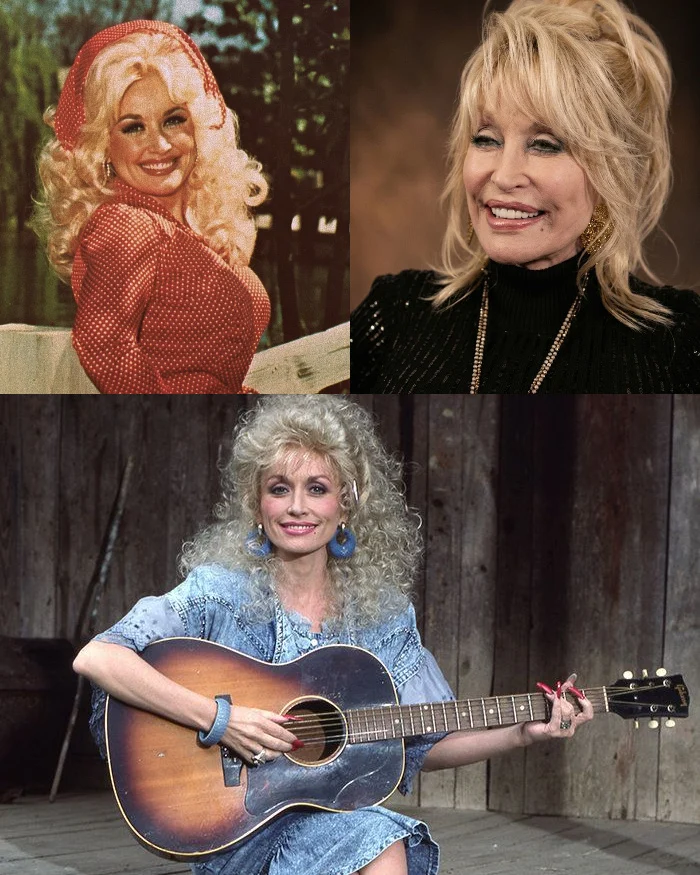
In the annals of pop culture history, few moments are as unexpectedly iconic as the one that began with a country music legend tapping her acrylic nails on a movie set. Dolly Parton, a woman who has always defied easy categorization, was about to turn a simple rhythmic sound into a rallying cry for office workers everywhere.
The year was 1980, and Parton, alongside Jane Fonda and Lily Tomlin, was filming a comedy about three secretaries who turn the tables on their oppressive boss. The movie, which would go on to become a cultural touchstone, was a direct response to the systemic workplace harassment and glass ceilings that held women back. But it was on that very set that Parton, without a guitar in hand, stumbled upon a beat that would change everything.
She began rubbing her long acrylic nails together, creating a clicking rhythm that sounded exactly like a typewriter. That simple, improvised percussion became the backbone of a song that would resonate with working women for decades. The track, which she wrote herself, was a clever blend of upbeat country-pop and a sharp critique of corporate exploitation.
Beneath the catchy melody, Parton was singing about exhaustion, stolen credit, and the daily grind of women who built empires for bad bosses. She gave a voice to the invisible labor force that kept the corporate world running, all while being denied a seat at the table. The song swept the Country, Pop, and Adult Contemporary charts simultaneously, a rare trifecta that cemented Parton’s status as a superstar who could cross boundaries.
In interviews, Parton has always framed her fight not as a partisan issue, but as a matter of basic human dignity and working-class survival. She reached conservative women across the South who felt alienated by radical politics but knew the quiet sting of unfair pay. By stripping away divisive terminology, she proved that a woman could rewrite all the rules without ever abandoning her femininity, her big hair, or her Southern roots.
Decades later, the track remains the definitive soundtrack for the American working class. A massive cultural shift did not start with a political speech or a corporate mandate. It started on a movie set, carried by the clicking rhythm of a country singer’s acrylic nails.