
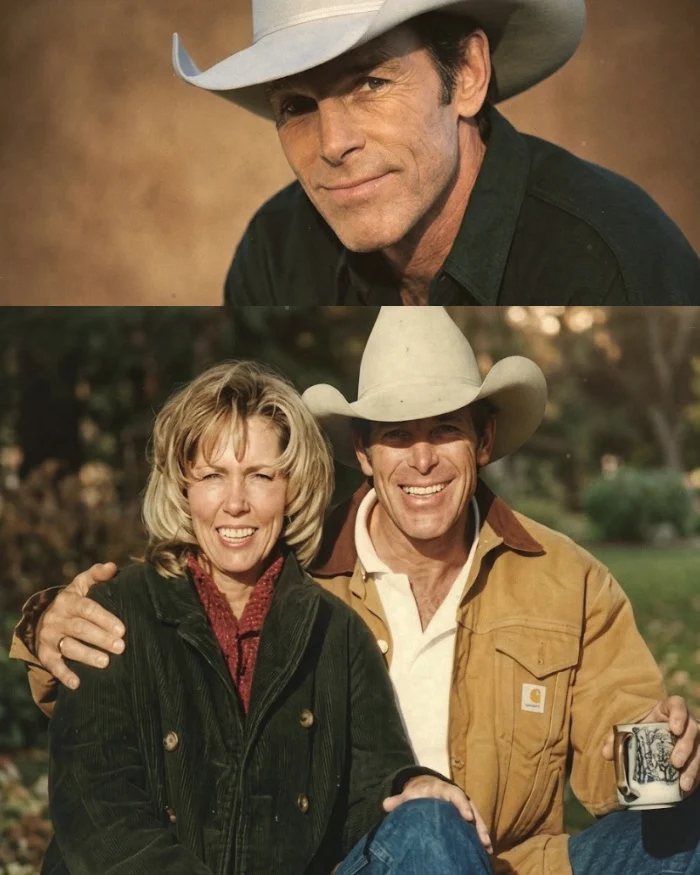
The gold buckle waited inside the Jim Norick Arena in Oklahoma City, but the man who claimed it had paid with shattered bones, highway miles, and a marriage that held together when his body nearly did not. Chris LeDoux won the PRCA World Bareback Championship in December 1976, yet the victory belonged just as fiercely to the young woman who iced his shoulders and drove through the night.
LeDoux had left college in his third year and plunged into the most punishing event in rodeo. Bareback bronc riding gave him no saddle, no stirrups, and no cushion between an eight-second grip and a brutal landing. A half-ton horse bucking beneath him could tear ligaments, wrench shoulders, and leave ribs bruised long after the chute gate opened.
The early 1970s tour nearly destroyed him. During his second season, he covered thousands of miles across state lines and finished summer with just 250 dollars in prize money. A horse stepped on his foot, a collarbone slipped out of place, and joints dislocated under the strain, while the rigging tore at his elbows until every ride felt like survival.
Sleeping in the cab of a pickup truck, broke, battered, and low on fuel, LeDoux admitted to friends that going pro had felt like the worst mistake of his life.
Turning pro felt like the worst mistake of his life.
Peggy Rhoads married him in 1972 and refused to let fear end his dream. She did not ask him to trade the chutes for a safe paycheck. She climbed into their rig and turned the cab into a mobile home, a field clinic, and a stubborn promise that he could keep going.
Between county fairs, stock shows, and small arenas, Peggy became the quiet force behind every ride. When a locked shoulder or torn muscle left LeDoux barely able to move, she took the wheel and drove through the night. She wrapped aching joints, pressed ice packs against swelling, and watched from the back pens while he mounted horses that weighed a half-ton.
He used so much athletic tape that he joked about owning stock in the company. Peggy applied the white layers before he stepped onto the chute boards, binding his body into something strong enough to ride again.
Money was often too thin for diners or motels. They bathed in mountain creeks, ate canned food, and counted change for entry fees at the next rodeo secretary’s desk. When LeDoux’s father began pressing small runs of cassette tapes in Tennessee, Chris sold them from the back of the truck to buy fuel for the next town.
In Kaycee, Wyoming, the couple raised the walls of a log house between rodeo runs. Their son, Clay, eventually kept Peggy off the road for longer stretches, but the home they built gave LeDoux a clear target, the National Finals Rodeo in Oklahoma City.
Spring 1976 tested him again. Riding a horse named Molly Brown in Phoenix, he pulled his collarbone apart mid-ride. He rested for a month, returned in Lubbock, Texas, and took first place. Heading into winter, he trained daily on a mechanical bucking machine to sharpen his timing.
December 1976 brought the final test. Across ten rounds against the top stock in the country, LeDoux rode with surgical consistency. He earned 4,912 dollars at the finals and finished the year with 19,022 dollars, capturing the PRCA World Bareback Championship.
When LeDoux strapped on the gold buckle, it honored raw cowboy grit. It also honored the woman who held ice packs, steered through empty highways, and kept a broken, broke rider believing in the ride.