
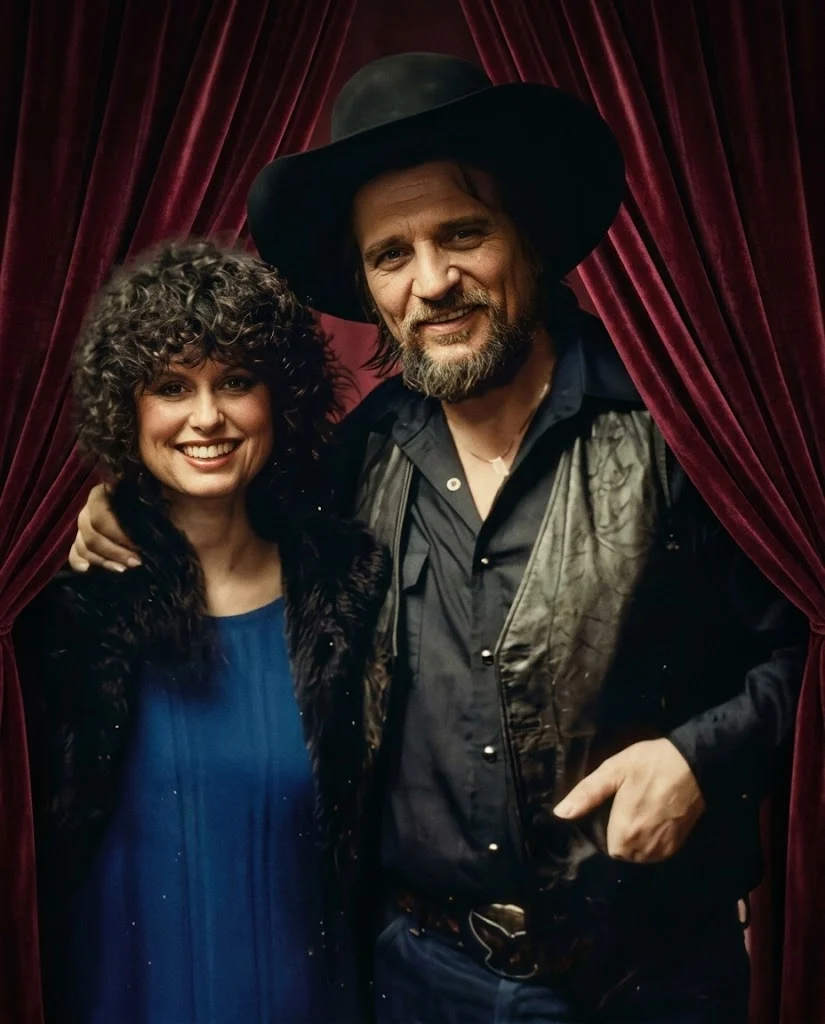
Waylon Jennings ruled outlaw country in 1979, yet the milestone that mattered most fit inside his palm.
By the late 1970s, the Outlaw movement had torn open the doors of the Nashville establishment. Waylon Jennings and Jessi Colter stood at the center of a musical revolution. They filled arenas, moved millions of records, and raced through a relentless schedule.
The public saw leather, grit, and rebellion. Behind closed doors, a newborn boy changed everything.
On May 19, 1979, the couple welcomed their only child together. They named him Waylon Albright Jennings, and the world soon knew him as Shooter.
He arrived at the peak of his parents’ commercial power. The timing placed him inside the whirlwind of the music industry, but the baby gave his parents a rare and needed anchor.
Friends who visited during those early days saw a tender side of the famous Texas singer.
The man known for a road worn persona and a booming baritone cradled his newborn son in one massive hand. He carried the infant into the living room and proudly showed him to an inner circle filled with some of the biggest names in American music.
For a brief window, chart positions and platinum plaques faded behind the quiet pride of fatherhood.
The Outlaw image belonged to the public, but the pride of holding his son belonged to Waylon.
The boy spent his early childhood sleeping on tour buses and watching his parents command stages. Then he had to grow into the weight of his last name.
Carrying the Jennings legacy meant facing an intimidating shadow. The industry expected Shooter to step into his father’s boots, wear the cowboy hat, and repeat the outlaw sound of a generation.
He chose a different path.
Shooter refused to become a nostalgia act. He built a distinct career as a Grammy winning producer, earning respect for shaping records rather than simply trading on heritage.
His work behind the console with Tanya Tucker and Brandi Carlile showed he could revive careers and lift modern voices. He became an architect of the future of music, not just an heir to its past.
Waylon died in 2002, and the outlaw era eventually became history. Jessi Colter lived to see her son become a visionary in the same industry that had once defined his parents.
She watched him move through the business with the same stubborn independence that had fueled the Outlaws.
The movement had always demanded freedom to make music your own way. The boy who once fit in his father’s hand carried the family name forward exactly as Waylon would have wanted, entirely on his own terms.