
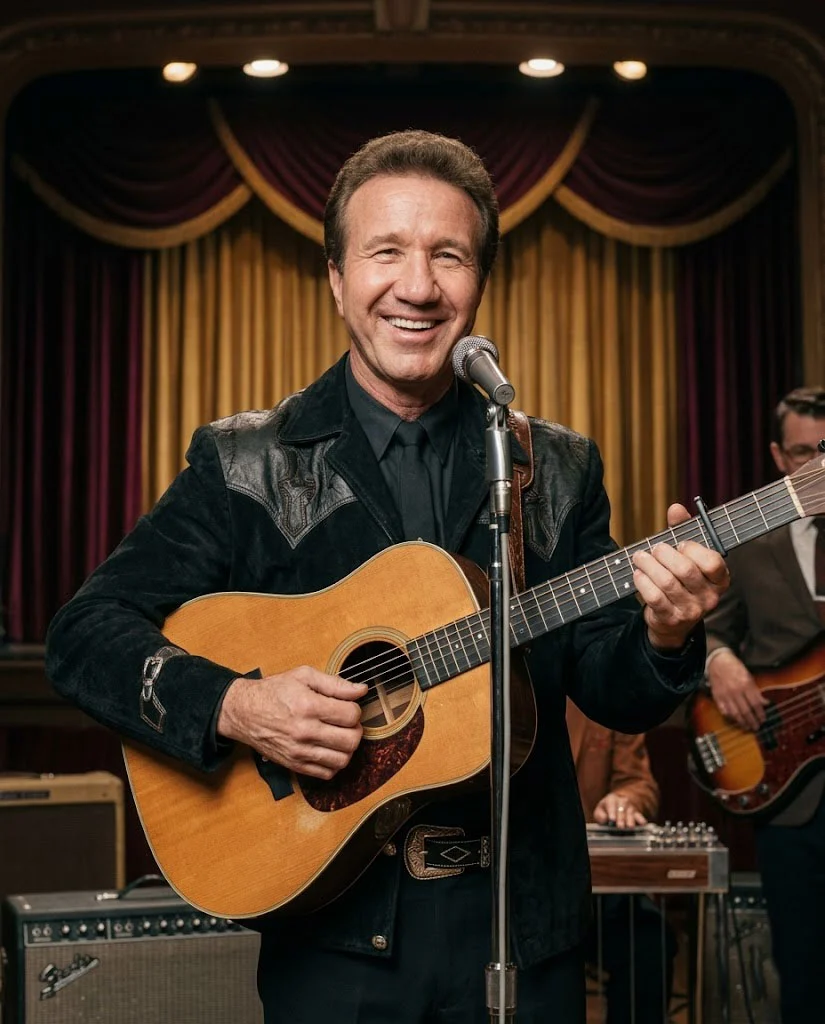
The hospital room was quiet, and that silence felt heavier than any stage Marty Robbins had ever filled. He had spent his life chasing speed, sound, and stories, yet in 1970 he faced a medical gamble that could have ended his song before the final note.
Marty Robbins was not the kind of man who seemed made for waiting rooms. He sang about cowboys and longing, toured with relentless drive, and loved racing so much that danger felt like a familiar passenger.
In late 1969, a serious heart attack stopped him on the road. Doctors warned that his future could be short. For the first time, the voice that had filled countless rooms had to listen to his own breathing.
By January 1970, he faced an experimental triple bypass surgery. Few had survived such a risky procedure, and Nashville held its breath while fans, family, and friends waited for word.
Before the doctors wheeled him away, Marty asked for something simple. He wanted time to say goodbye if the operation did not work. That quiet wish revealed the man behind the legend.
He did not ask for fame. He asked for love, and he asked for a chance to speak it.
Marty survived. Recovery should have made his world smaller, but he reached past fear. From the hospital bed, he wrote My Woman, My Woman, My Wife for Marizona Robbins, the woman who had stood beside him through work, travel, pressure, and worry.
The song was not a showman’s performance. It was a husband’s gratitude. It carried the honesty of a man who had looked at mortality and understood that devotion is often measured by the person still standing there when the lights fade.
Country music loved it. The song later won him another Grammy, yet the award felt secondary to the truth inside the lyric. He had come back from the edge and chosen thankfulness before triumph.
Months later, Marty returned to the stage. He also returned to racing, as if life itself refused to be treated gently. Some may have called that reckless. For him, it seemed like a promise kept.
His story lingers because he was not fearless. He was afraid, survived, and still gave love the first song.
Sometimes the truest love song is written after a man nearly loses the chance to say thank you.