
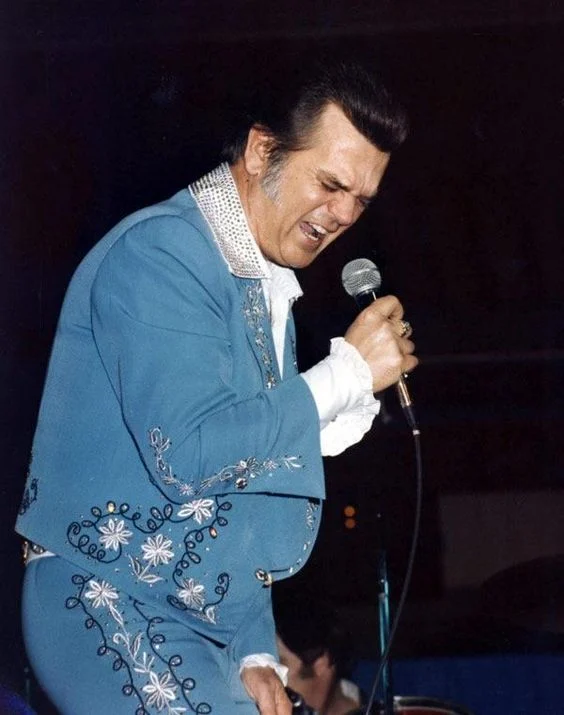
The opening guitar note was a held breath. It lingered in the air, waiting for a confession. In 1973, Conway Twitty released the track on MCA Records. The song was ‘You’ve Never Been This Far Before’ and it arrived with the quiet force of a deeply personal secret. It became a shared moment between the singer and millions of listeners
The man behind the voice was Harold Lloyd Jenkins. He had traveled a long road from his rockabilly roots at Sun Records. By the early 1970s he had transformed into Nashville’s most trusted narrator. He sang about adult decisions. He sang about the moments between right and wrong. This song was the pinnacle of his Countrypolitan era. It was a sound that polished the rough edges but kept the emotional honesty intact. Twitty himself had perfected this intimate approach on earlier songs like Hello Darlin’
The lyrics sparked immediate outrage. Radio stations banned the single. They felt the story was too suggestive. The public felt differently. They drove the song to number one on the country charts. It also crossed over to the pop Top 40. This was a rare victory for a country song at the time. It proved that honest storytelling could break down any wall
Producer Owen Bradley understood the power of the unsaid. His arrangement does not crash or scream. It conspires with the listener. The drums are brushed. The bass line is a slow heartbeat. The piano traces a simple sad melody. The high stakes drama of the lyrics is wrapped in soothing sound. Every instrument is placed with care. Nothing is wasted
The genius of Owen Bradley’s production on this track is how he uses lush orchestration to create a feeling of absolute, devastating isolation
The strings arrive like a sigh. They surround the listener rather than overpower them. The textures feel tangible. The warmth of the tape saturation adds a vintage glow. Twitty’s voice sits in the center of this velvet room. He uses his signature speaking style. He breaks the fourth wall and speaks directly to the listener. ‘You’ve been telling me all night long…’ The vibrato stretches just enough to reveal the anxiety beneath the calm surface
This song did not exist in a vacuum. It was part of a golden era for the adult confessional country song. Tammy Wynette captured a similar loneliness on ‘Til I Can Make It On My Own. Charlie Rich explored secret love on Behind Closed Doors. Glen Campbell felt the heavy weight of a solitary life on Wichita Lineman. Sammi Smith delivered a world weary plea on Help Me Make It Through the Night. The slow burn sensual vocal approach was not limited to Nashville. Joe Simon brought a similar weight to the soul classic The Chokin’ Kind. These were not songs for the honky tonk dance floor. They were songs for the car radio late at night. They were songs for the quiet moments of reflection
The micro story of the song lives on. A couple in a car on a foggy highway. A listener in a dimly lit room. The hesitation before a big decision is a universal experience. The song captures this precise moment with grace and honesty. It does not judge. It merely understands
The power of the lyrics lies in their directness. ‘I can almost hear the stillness… as it yields to the sound of your heart beating’. This is poetry born from observation. The entire track feels like a room where the outside world cannot enter. The emotional drama is all in the restraint. It is a study in control. Twitty’s vocal restraint contrasts with the dangerous subject matter. This is what makes the listener lean in
The song endures because it is a truthful portrait of a confusing human moment. It is the sound of reaching the point of no return. It is a song that asks for trust in the face of the unknown. Decades later it still carries the same weight. It remains a perfect example of sophisticated narrative driven country music that refused to sacrifice its soul for commercial gain