
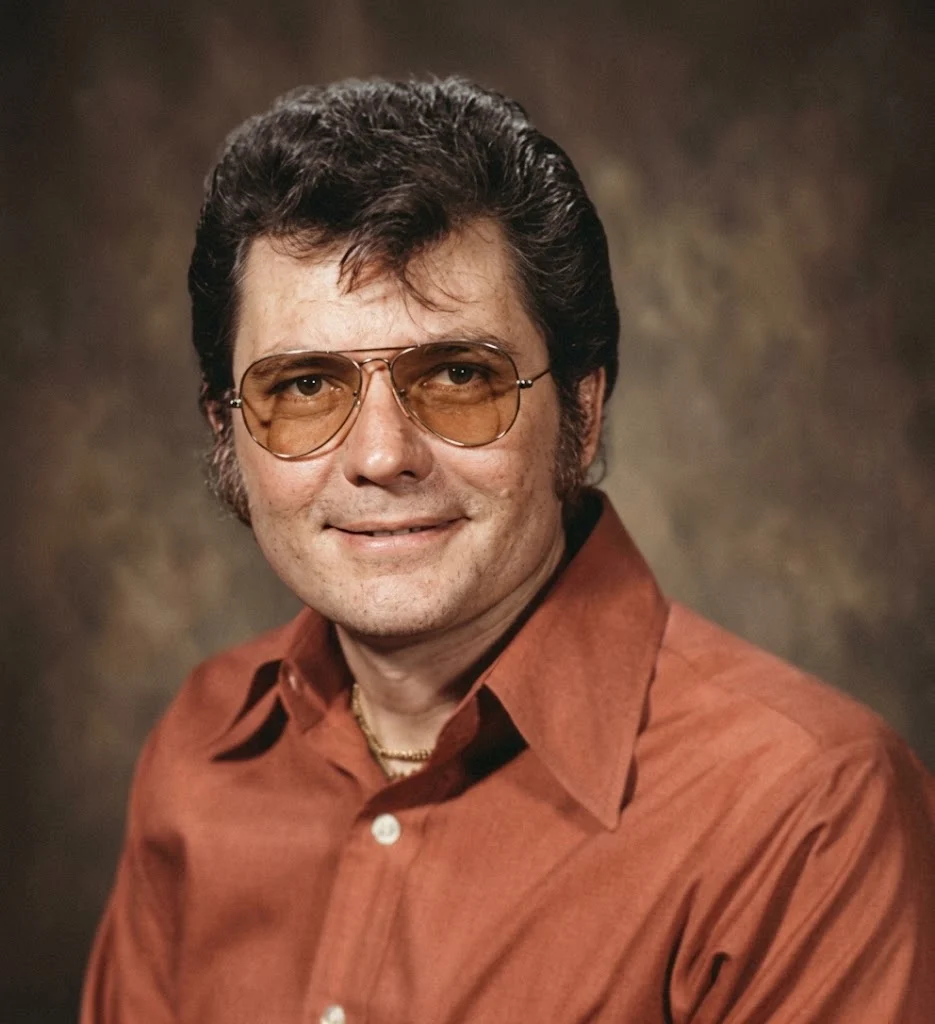
The applause faded long before Lew DeWitt could stand under the spotlight again.
He had written one of the most beloved songs in country music, yet his final act was not a hit single. It was the graceful way he stepped aside and left the stage to the next generation.
Lew DeWitt was the defining tenor of The Statler Brothers and the lone writer behind their 1965 Grammy-winning breakthrough, “Flowers on the Wall.” For nearly two decades, his clear voice anchored a quartet that helped shape American country and gospel music.
Before the group became a headline act, they spent more than eight years touring alongside Johnny Cash. They paid their dues in small towns and massive arenas, building a sound that felt polished, warm, and unmistakably human.
DeWitt stood shoulder to shoulder with Don Reid, Harold Reid, and Phil Balsley, delivering intricate four-part harmonies that defined an era.
Behind the stage lights and tailored suits, he carried a grueling private battle. Diagnosed with Crohn’s disease in his youth, he spent his adult life navigating a chronic illness that offered little relief.
The touring machine of that era demanded relentless schedules. DeWitt endured cramped buses, long nights in unfamiliar rooms, and intense pain just to reach the microphone.
He used music as a shield. He smiled through agony to hit the high, clean notes audiences came to hear, and night after night his performances sounded so effortless that no one in the room could guess the cost.
Knowing what he endured, “Flowers on the Wall” gains a deeper meaning. The song became a massive crossover hit, praised for its upbeat tempo and clever lyrics.
Yet the lines about counting flowers on the wall and playing solitaire feel less like a catchy hook and more like a quiet reflection of his own forced isolation.
They read like an accidental autobiography of the long, lonely hours he spent confined to rooms when illness made it impossible to face the world.
He gave the world his voice for as long as he could bear the pain.
By 1982, the physical toll had become too heavy. His body could no longer survive the exhaustion of the road, and he knew the time had come to step down.
For a man whose life was built around the stage, that reality could have been bitter. Instead, DeWitt handled it with profound grace, making sure the transition felt like an emotional goodbye to family rather than a cold business arrangement.
When he realized he could not return, he did not leave a void. Like an Old West rider handing over his reins, he personally championed Jimmy Fortune to take his place.
Fortune had originally been called in as a temporary replacement. DeWitt’s endorsement turned that temporary fix into a permanent succession and gave his blessing for the band to enjoy a massive second wave of success without him.
After leaving the spotlight, DeWitt settled in Waynesboro, Virginia. His health continued to decline, but he never fully severed his ties to music. In his quietest years, he managed to record rare solo material.
He passed away on August 15, 1990, at just 52 years old. His death closed the book on one of the most resilient and physically agonizing lives in country music history.
Today, the legacy of The Statler Brothers is firmly secured in the Country Music Hall of Fame. For those who know the full story, the true measure of Lew DeWitt extends far beyond a Grammy Award.
His legacy is not defined by the illness that took him from the stage. It lives in the voice he gave the world, the pain he carried with dignity, and the way he made sure the song kept playing.