
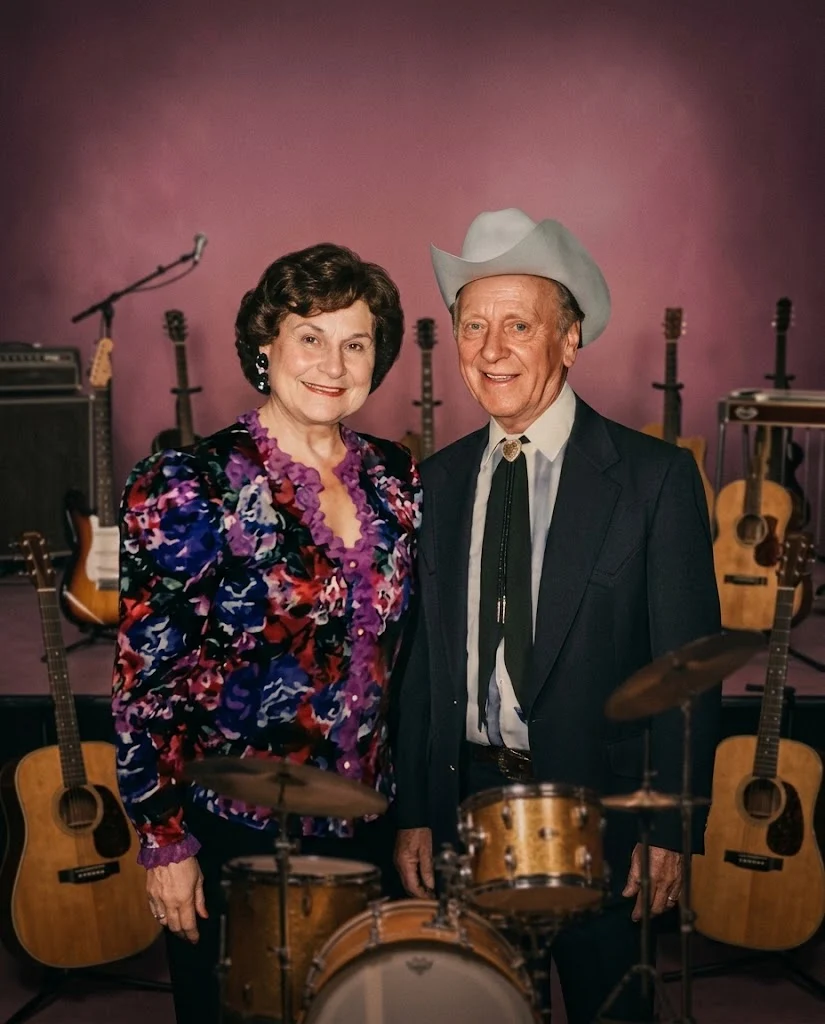
A $125 paycheck became one of the most dangerous sounds in country music. In 1952, Kitty Wells did not march into a studio to challenge a nation. She walked in to help her family.
At that moment, radio often told a one sided story. When a marriage fell apart, women carried the shame in silence while the airwaves repeated the man’s complaint. Hank Thompson’s “The Wild Side of Life” had become a national hit and blamed a woman who chased the neon lights. The song’s accusation cut deep.
“I didn’t know God made honky tonk angels.”
Decca Records executive Paul Cohen heard the hit and saw a chance for a musical answer. He brought a rebuttal written by J.D. Miller to Kitty Wells, a 32-year-old mother of three who had struggled for years to find her own place as a solo singer.
She was not looking to become a rebel. She had even considered leaving the music business to stay home full time. The practical reason she said yes was simple. The session paid the standard union scale of $125, and she planned to use the money for everyday family needs.
On May 3, 1952, she recorded “It Wasn’t God Who Made Honky Tonk Angels” at Castle Studio in the Tulane Hotel in Nashville. Her voice was pure, calm, and sad enough to sound like truth.
The song turned the accusation around. It suggested that for every woman blamed for a broken home, there was often a man who had lied, tempted, and left.
“It wasn’t God who made honky tonk angels.”
The backlash arrived fast. Conservative listeners and powerful gatekeepers treated the record as a threat to family values. NBC Radio banned it from its network and called the lyrics suggestive. The Grand Ole Opry initially forbade her from performing it on its stage.
But the attempt to silence the song made it louder. Housewives and working women across America heard their own hidden pain in her voice. They bought the single quietly and in enormous numbers, pushing sales past 800,000 copies.
The commercial flood forced the industry to listen. Billboard placed “It Wasn’t God Who Made Honky Tonk Angels” at No. 1 for six straight weeks, and Kitty Wells became the first solo female artist to top the country charts. NBC lifted its ban, and the Opry opened its doors.
The deepest irony was the woman at the center of the panic. She was not a big-city scandal. She was a soft-spoken Sunday school teacher in a gingham dress who remained married to Johnnie Wright for 64 years.
She never waved a banner or demanded a movement. She simply sang a truth that many women had been told to hide. That $125 recording session changed who was allowed to speak in country music.