
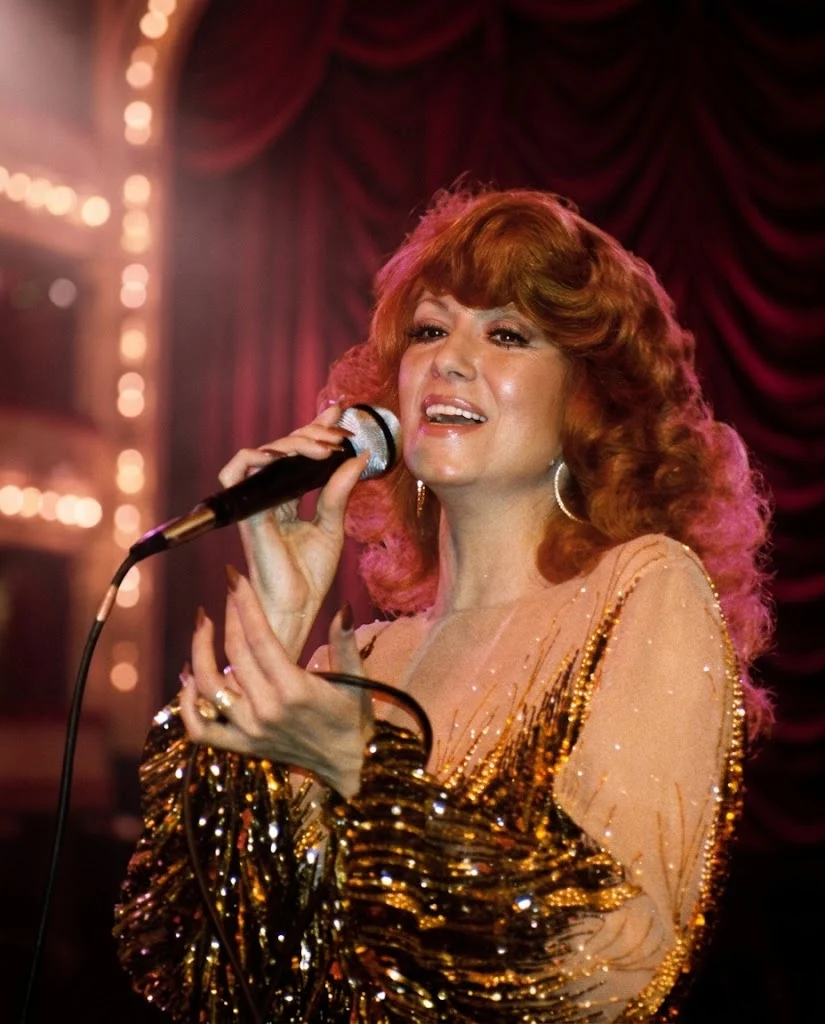
On a humid Nashville night in August 1991, Dottie West rushed toward the Grand Ole Opry with a broken car and a fading fortune, yet she still believed the stage could hold her together.
The radiant country singer had spent four decades turning heartbreak into harmony. By summer 1991, the public was invited to bid on the remnants of that life at an IRS auction. A baby grand piano. A 1976 Cadillac Fleetwood. A wardrobe that had carried her through decades of applause. Each item told the story of a fortune liquidated to satisfy debt.
That collapse had a name. Alan Winters. The sound engineer was twenty three years younger than West. She had married him hoping for companionship. Instead she had surrendered control of her wealth and her peace.
Behind closed doors, the abuse was severe. When she filed for divorce citing “cruel and inhuman treatment,” the financial damage was already done. Winters had steered her money into disastrous investments, and the accounts had been drained.
She chose an uncertain future over continued cruelty.
The divorce was finalized in 1990. West approached sixty completely broke. The bank foreclosed on her $800,000 colonial mansion in Williamson County, Tennessee. Her Chevrolet Corvette was seized. She moved into an apartment in Nashville’s Wessex Towers.
Kenny Rogers, her longtime duet partner, lent her a vehicle so she could keep moving. Despite the public loss, West refused to retreat. She planned a comeback, a new autobiography, and an album of duets with Tanya Tucker and Tammy Wynette. She kept appearing on the Grand Ole Opry stage. Some devoted fans bought her auctioned belongings only to return them to her.
Her life no longer carried the wealth of her peak touring years. Her commitment to the music remained intact.
On the evening of August 30, 1991, West was scheduled for another Friday night Opry performance. Running late, she drove herself toward the venue. Her car stalled on the side of the road. Her eighty one year old neighbor, George Thackston, saw her stranded and offered a ride.
Anxious about missing her curtain call, she accepted. As they rushed toward Opryland, Thackston took the Briley Parkway exit ramp too fast. The vehicle was traveling an estimated fifty five miles per hour in a twenty five mile per hour zone. It lost control, went airborne, and crashed violently into the central embankment.
When emergency responders reached the wreckage, West did not immediately appear to be in critical condition. She suffered a ruptured spleen and a lacerated liver, yet she directed the paramedics to treat her neighbor first. She told rescuers not to cancel her Opry appearance, believing she could still make it to the venue.
The internal damage was catastrophic. Over the next five days, doctors performed multiple intense surgeries. West remained conscious enough in the intensive care unit to receive visitors, including a final bedside visit from Rogers.
On the morning of September 4, 1991, while being prepared for a third operation, her heart stopped on the operating table. She was fifty eight years old.
Days later, fellow country artists and thousands of fans gathered at Nashville’s Christ Church for her funeral. Steve Wariner sang “Amazing Grace.”
Dottie West did not end her story in the colonial mansion she had lost. She did not end it in quiet retirement. She spent her final evening doing what she had done through the darkest chapters of her life, trying to get to the stage.