
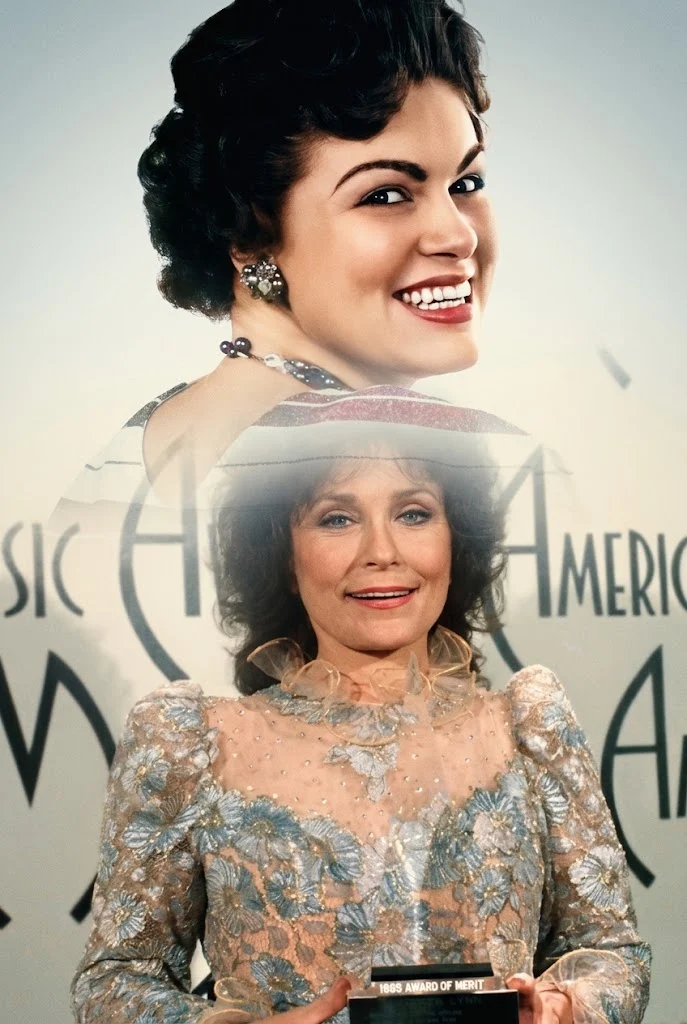
April 1977 found Loretta Lynn alone in a vocal booth, holding a microphone like a promise. She was about to send a song back to the top of the country charts, yet the real performance was not for the radio. It was for Patsy Cline, the woman who had once handed her a future and then vanished too soon.
Her version of “She’s Got You” reached number one on the Billboard Hot Country Singles chart. It arrived fifteen years after Cline’s original had swept country music in 1962. Listeners heard a familiar melody. Lynn heard a conversation that had begun long before the plane crash of 1963 took her mentor at age 30.
When Lynn first arrived in Nashville in 1961, she came from Butcher Holler with nerves raw and hope fragile. The industry did not make room for women easily. It often made them compete for the same narrow spotlight. Cline saw a younger sister instead of a rival. She gave Lynn stage clothes, taught her how to apply makeup, and showed her how to stand tall in a male-dominated business.
The gift went deeper than a wardrobe. Cline warned Lynn that promoters and booking agents would test her. She told her to demand the same respect given to male artists. She made one rule plain. Never leave a venue until the promoter had handed over the full payment in cash.
That advice was not style. It was survival.
By 1977, Lynn had become Country Music’s Queen. She was selling out arenas and collecting hits of her own. Still, she used her platform to make a new generation remember the woman who had championed her. I Remember Patsy became the tribute. Lynn recorded nine of Cline’s definitive classics with Owen Bradley, the legendary producer behind Cline’s original sessions.
She did not leave the album as a simple collection of covers. Lynn wove spoken memories between the tracks. She shared a recorded conversation with Bradley, letting fans hear Cline’s humor, her steel, and the private moments that had shaped their bond. The record became a living historical document.
Recording “She’s Got You” meant facing the heaviest grief of her life one line at a time. Fans pushed it to number one because they could hear the quiet heartbreak inside the take. It was not a comeback. It was a repayment.
A tragic flight could empty a stage, but it could not silence the bond between them.
Lynn carried Cline’s legacy back to the absolute peak of country music. In doing so, she proved that mentorship can outlive tragedy, friendship can outlast loss, and a song can become a vow.