
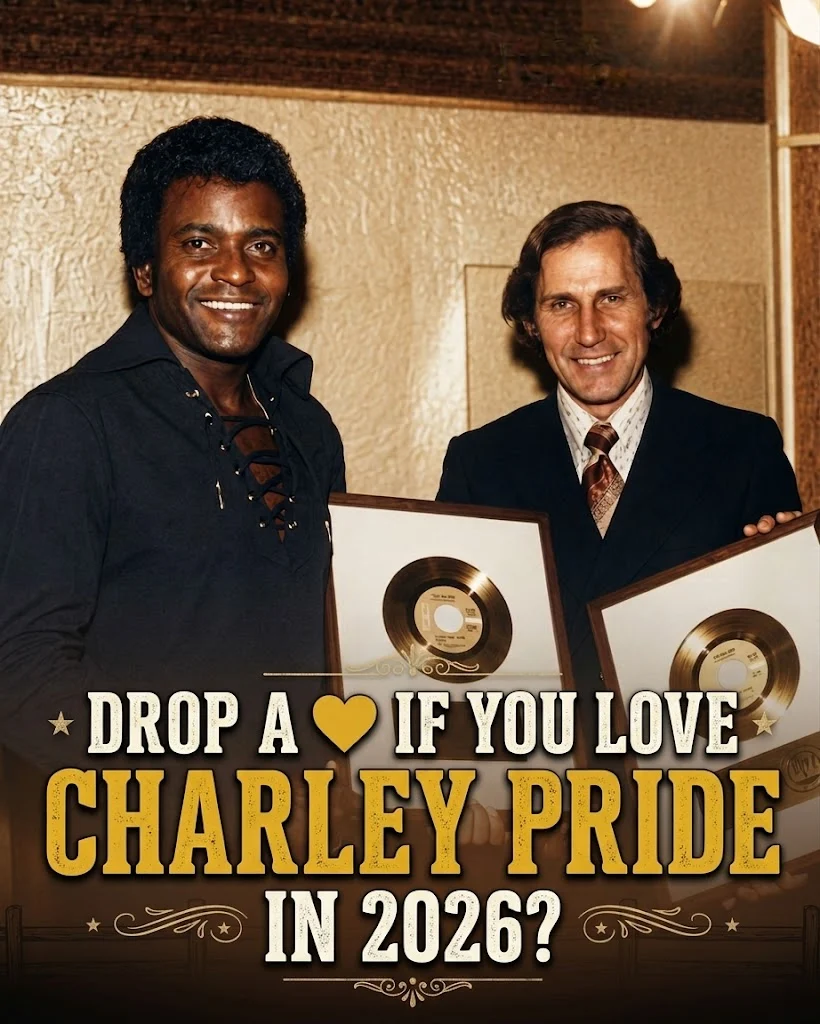
Charley Pride stepped into the stage lights in the Deep South, and the room gasped before he sang a word.
Then his warm baritone rose, and the fear melted into reverence.
That moment was the heart of his story.
Country music in the 1960s did not need a written keep out sign for a Black man.
The silence did the work.
He was born to sharecroppers in Sledge, Mississippi, and he picked cotton before he ever chased a stage.
He also chased a baseball dream through the Negro Leagues, hoping a fastball could carry him out of poverty.
But the sound living inside him was too loud to ignore.
It was traditional country music, the pure sound he caught from the Grand Ole Opry on a crackling battery powered radio.
When legendary producer Chet Atkins heard him, he recognized a once in a generation voice.
The industry gatekeepers were afraid.
They knew the prejudice of the era could crush a record before it played.
So RCA Records released his first singles in 1966 without sending out his face.
They let the voice travel blind.
Listeners across America fell in love with the singer before they knew who he was.
Then the live shows arrived.
In smoky honky tonks, the crowd stared in disbelief when the man behind their favorite songs walked into the light.
Charley Pride could have let the fear win.
Instead, he smiled, stepped to the microphone, and sang.
The opening lines of Kiss an Angel Good Mornin’ or Is Anybody Goin’ to San Antone turned hostility into hush.
He did not fight the system with anger.
He dismantled it with grace, a guitar, and a voice that refused to hide.
His career carried 29 number-one hits and made him RCA’s biggest-selling artist since Elvis Presley.
He earned three Grammys, the 1971 CMA Entertainer of the Year award, and a permanent place in the Country Music Hall of Fame.
Songs like It’s Just a Matter of Making Up My Mind felt like a quiet reflection of his own life.
He made up his mind early that he belonged in country music.
He waited for the world to catch up.
He did not just walk through the doors of the Country Music Hall of Fame.
He tore them off their hinges so quietly that many people realized it only after he was already standing inside.
When he died, the music world lost a legendary singer, a pioneer, and a masterclass in quiet dignity.
True greatness cannot stay hidden forever.
His legacy still rests in the first note that made a frightened room listen.