
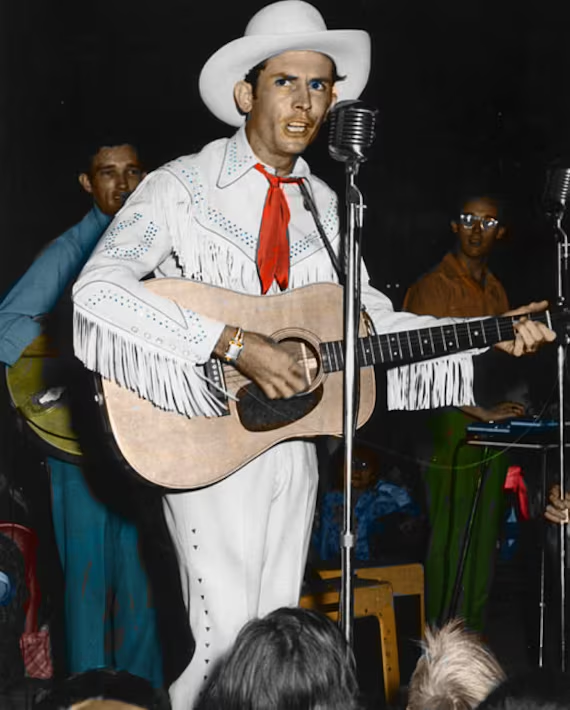
Hank Williams was gone before the world truly heard what he had left behind. On New Year’s Day 1953, as “Your Cheatin’ Heart” climbed the charts, the country music legend was already dead, his heart finally giving out in the back of a Cadillac. The song became his last number one hit, a bittersweet farewell that turned a simple melody into a monument of heartbreak.
Your cheatin’ heart will make you weep / You’ll cry and cry and try to sleep
That raw, unflinching honesty is what makes the track endure. Williams wrote it in 1952 during a road trip with his fiancée, but the inspiration came from a much darker place—his own crumbling marriage and the emotional wreckage of fame. The lyrics were almost biographical, a confession set to a twangy guitar. He knew betrayal intimately, and he let that pain seep into every note.
Released just weeks before his death, the song struck a chord with millions. It wasn’t just a hit; it became a catharsis for anyone who had ever loved and lost. Audiences heard a man singing his own obituary, a final testament to the turmoil he could never escape. The tragic timing only deepened its power.
Over the decades, “Your Cheatin’ Heart” has been covered by artists from Patsy Cline to Norah Jones, crossing genres and generations. Its message remains universal: love can be cruel, but the ache it leaves behind is something we all understand. The song didn’t just define Hank Williams—it defined country music itself, proving that the most personal stories can become the most timeless.