
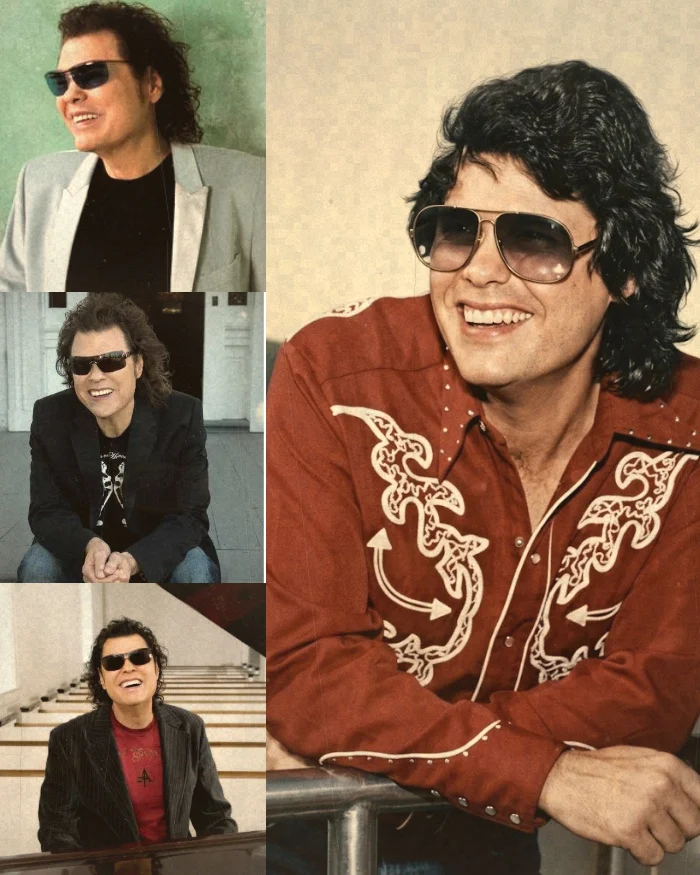
A blind newborn was cast aside, and two Appalachian grandparents answered with a radio, a wooden shack, and a fierce belief that music would speak for him.
Ronnie Milsap entered the world with congenital glaucoma. His mother saw his near-total lack of sight as a punishment and left him behind.
Homer and Phenia Frisby stepped forward immediately. They carried the baby to their wooden cabin in the North Carolina mountains, a place stripped of electricity and running water and far from modern comfort.
They survived by working the rough mountain land. Money was scarce, but their home carried a deep spiritual richness. They set a battery-operated radio inside the cabin, and while darkness pressed around him, young Ronnie stored country, gospel, and rhythm and blues broadcasts that floated over the Smoky Mountains.
The wind slipping through floorboards and the static humming from that old radio became his first teachers.
Music instead of silence became his rescue
By age five, his grandparents understood that he had a rare musical gift. They also knew their isolated mountain home could not give a blind child the education he needed. In one of the hardest choices of their lives, they sent him hundreds of miles away to the Governor Morehead School in Raleigh.
The painful separation opened a path. Teachers at the state school noticed his extraordinary ear and guided him into rigorous classical training. He learned to read music in Braille and devoted himself to the violin and the piano with a discipline that set him apart.
Even after formal lessons, the mountain sounds stayed alive inside him. He stole time at keyboards to chase the driving rhythms of early rock and rhythm and blues. Ray Charles showed him that sight was not required to command a stage and grip an audience.
He tried a steadier road for a time, attending Young Harris College in Georgia on a scholarship and studying pre-law. The live audience called louder than the classroom. He left those plans behind, formed his own band, and plunged into the Atlanta music scene, sharpening his voice and stage power in local rhythm and blues clubs.
His skill as a brilliant and flexible session player later carried him to Memphis. Producers took notice of his keyboard command. That recognition brought a career-defining chance to play piano and sing backing vocals on Elvis Presley’s recording session for ‘Kentucky Rain’.
The biggest shift in his solo journey came in the early 1970s at the Whiskey A Go Go in Los Angeles. Country giant Charley Pride was in the crowd that night. Pride heard the rare soulful range in Milsap’s voice and urged him to move to Nashville and commit fully to country music.
He moved to Tennessee in 1972 and signed with RCA Records. His sound helped reshape country radio. He became a defining architect of the country-pop crossover movement, weaving rhythm and blues feeling into traditional Nashville production. Over two decades, he gathered 40 number-one country hits and stretched the genre’s sonic boundaries.
Even as his rise carried him into the Country Music Hall of Fame, he never denied his humble roots. He kept pointing to the foundation laid inside that North Carolina shack and to the two people who saved him from being discarded.
Homer and Phenia Frisby gave up the only family they knew so their grandson could fly. They handed him to the world, and Ronnie Milsap spent the next six decades making sure their sacrifice rang in every note.