
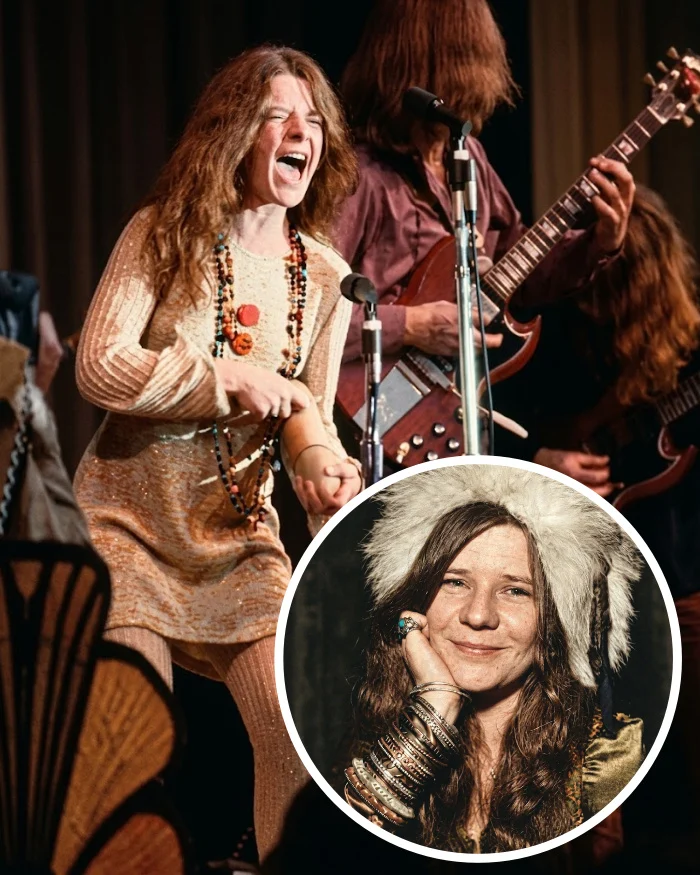
Janis Joplin stood at the microphone in Monterey in the summer of 1967 and turned a second chance into the roar of a lifetime.
Big Brother and the Holding Company had already played their set. Director D.A. Pennebaker had missed the full explosive force of her voice on film. The organizers asked the band to come back the next day so the cameras could capture it.
That return became a radical psychedelic rearrangement of Big Mama Thornton’s “Ball and Chain.” Joplin dropped every mask of polish. She stomped. She sweated. She pushed her voice until it seemed ready to break.
Mama Cass Elliot watched from the front row and mouthed the word Wow.
Columbia Records president Clive Davis sat close enough to see the moment change everything. He signed the band on the spot.
For the insecure girl from Port Arthur, Texas, Monterey offered the validation she had searched for all her life. Her wild and fragile intensity finally found a crowd that met her there.
Almost immediately after the festival, the family inside Big Brother began to crack. Music writers and industry leaders singled Joplin out as a generational talent trapped beside an amateur backing band. The reviews often praised her raw voice while overlooking the musicians standing beside her.
By the time Cheap Thrills reached number one in 1968, driven by the massive success of “Piece of My Heart,” the pressure had become unbearable. Joplin felt torn between loyalty to the musicians who had taken her in and the industry push toward solo stardom. By the end of the year, she made the painful decision to leave Big Brother behind.
Stepping out as a headliner brought a new kind of exhaustion. Crowds now expected the same bleeding, uninhibited intensity she had unleashed at Monterey every night. To meet that demand, she formed the Kozmic Blues Band in 1969, adding a brass section and steering her sound closer to rhythm and blues.
The transition was turbulent. Without the safety net of her former bandmates, she carried the full weight of public expectation. She played larger venues, earned higher fees, and performed at historic events like Woodstock, but the relentless tour schedule took a heavy toll on her vocal cords.
Critics were often harsh about the Kozmic Blues project and kept comparing her new arrangements to the raw lightning of 1967. Behind the scenes, her reliance on alcohol and heroin escalated as she tried to survive the isolation of life on the road. The wild stage persona crowds demanded became impossible to sustain off stage. By late 1969, the Kozmic Blues Band dissolved.
Joplin took time off, traveled to South America, and tried to get clean while piecing together a new musical vision. In the spring of 1970, she finally found the anchor she had been searching for.
She formed the Full Tilt Boogie Band, a tightly rehearsed group of musicians she handpicked and placed on a steady salary. For the first time since her early days in San Francisco, she felt confident in the groove behind her.
That fall, she brought the band into Sunset Sound Recorders in Los Angeles to cut what would become her final album, Pearl. Working with producer Paul A. Rothchild, she stepped into the role of a serious vocal arranger and bandleader. She shaped tracks like “Me and Bobby McGee” and the a cappella “Mercedes Benz.” People who were there remembered those sessions as among the happiest and most focused days of her professional life.
She was finally learning to command her immense talent without letting it consume her.
Janis Joplin died of an accidental overdose on October 4, 1970, before the album was completed. She had spent the three years after Monterey carrying the enormous expectations placed on her shoulders that afternoon. She had spent her childhood wanting the world to look at her, and when the cameras finally turned her way, she gave them a voice they never forgot.