
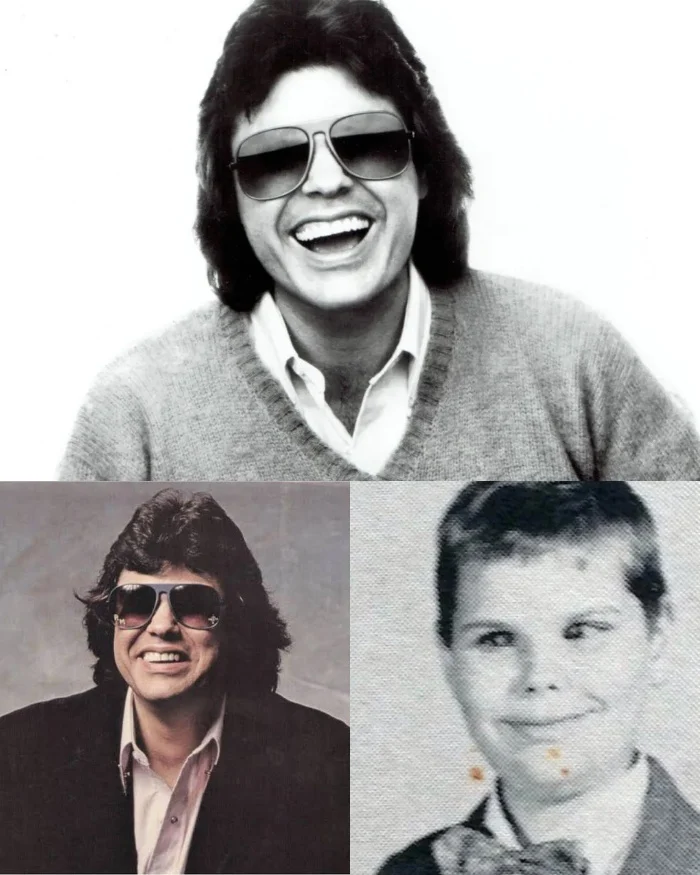
Phenia Frisby let go of a five-year-old hand at a Raleigh campus because love demanded a painful step away from home.
Ronnie Milsap had never seen the mountain clearly. His world had been touch, sound, and the steady guidance of an elderly woman. Now he faced brick halls, unfamiliar beds, and lessons that could open a future no cabin could hold.
That separation began a journey that turned hardship into music. Ronnie entered the world in 1943 in Robbinsville, North Carolina, almost completely blind from a congenital disorder. His mother left him as an infant after treating his disability as an unbearable punishment.
Homer and Phenia Frisby carried the newborn into their weathered mountain cabin. The home had no electricity and no indoor plumbing. Kerosene lamps and a wood stove pushed back winter drafts. In a place where physical disability often invited harsh prejudice, the couple offered a shelter built from patience and stubborn devotion.
Sound became the family’s way of lighting darkness. On Saturday nights, Homer and Phenia switched on a battery-operated radio. They spent meager farming earnings on replacement batteries so the boy could hear the Grand Ole Opry. On Sunday mornings, they guided him down mountain dirt trails to the local Baptist church. His ears learned gospel harmonies around a small wooden pulpit.
They let him go so his hands and ears could find a wider world.
When Ronnie reached five years old, his grandparents made a choice that cost them deeply. In the autumn of 1948, they sent him hundreds of miles east to the Governor Morehead School For The Blind in Raleigh. Phenia released his hand on that distant campus. She accepted an agonizing separation so he could learn Braille, study classical piano, and discover that life reached far beyond darkness.
Arrival in Raleigh meant trading familiar timber floorboards for institutional bells, communal dormitories, and rigid routines. For a child accustomed to his grandmother’s steady arm on dirt paths, the early months carried acute homesickness and the demanding task of reading Braille through calloused fingertips.
Instruction at Morehead was rigorous and uncompromising. Teachers quickly noticed that young Milsap possessed absolute pitch. He could identify any note struck on a keyboard without seeing the instrument. That discovery placed him under strict classical training. Instructors drilled him on Bach fugues, Mozart sonatas, and Beethoven concertos for hours every day.
Discipline on campus was stern, yet music offered an open doorway. Milsap mastered piano keys, learned violin, and absorbed the theoretical architecture of counterpoint and harmony. His finger dexterity turned complex compositions into second nature.
The school provided an elite classical foundation, but his ears drifted past the curriculum. In the dormitories at night, students huddled around small transistor radios. They searched the AM dial for distant rhythm-and-blues stations out of Nashville and Memphis. Milsap fell in love with Ray Charles, Jerry Lee Lewis, and the energetic pulse of early rock-and-roll.
He practiced classical scales by day and secretly figured out barrelhouse blues progressions after teachers left the practice rooms. When instructors warned him that playing popular music would ruin his classical touch, Milsap kept listening anyway. He recognized that the emotional honesty of gospel, the precision of classical sonatas, and the raw groove of southern blues were built on the exact same notes.
By his teenage years at Morehead, Milsap formed his first campus band, The Apparitions. The group played local dances and fraternity parties around the Triangle area. When he finally graduated from the Raleigh school in 1962, he possessed a full scholarship to study pre-law at Young Harris College in Georgia. He also carried professional-grade keyboard fluency that defied every mountain boundary his family had feared.
The law books would eventually give way to honky-tonk stages, Memphis session work, and dozens of country chart-toppers that redefined modern Nashville sound.
Yet every intricate chord progression Ronnie Milsap ever struck under the bright lights traced its origin back to that brick campus in Raleigh, and to the elderly couple in the Smoky Mountains who let go of a little boy’s hand so he could find the keys to his own life.