
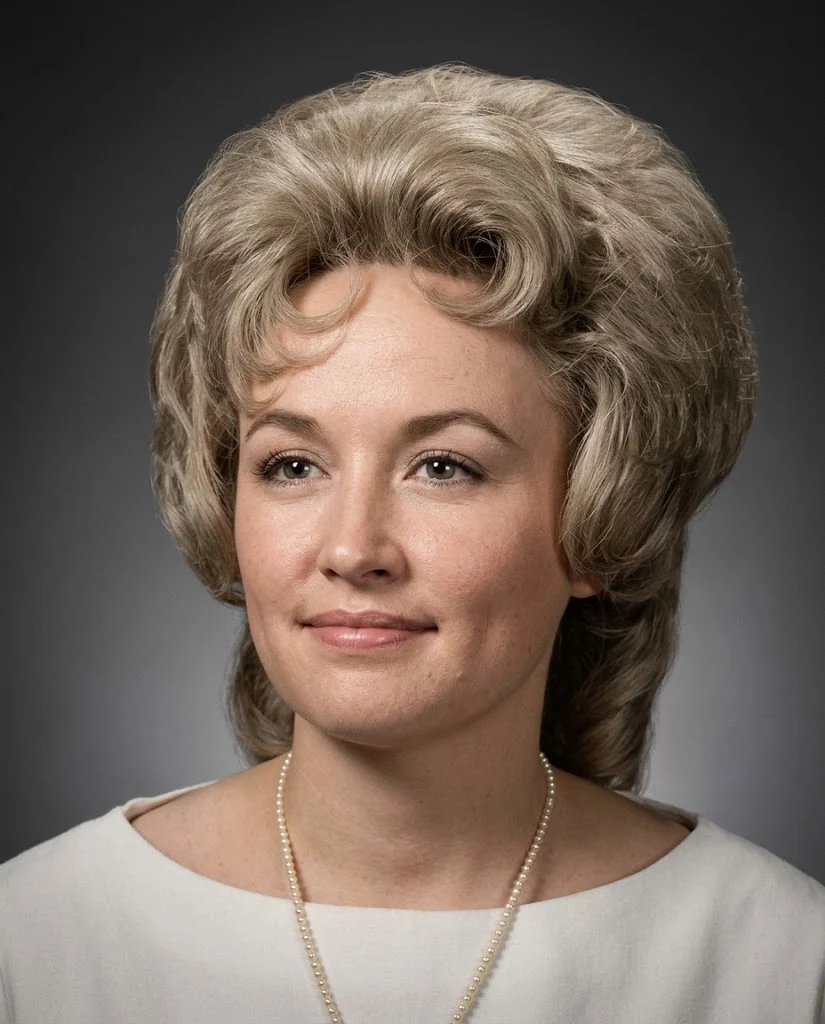
At dawn on June 1, 1964, an eighteen-year-old Dolly Parton carried her entire world onto a bus heading for Nashville. The paper grocery bags in her hands could tear at any moment. They held worn clothes, handwritten lyrics, and memories of a home where pork fat soap and cobweb bandages once served as ordinary comforts.
Behind her stood the Great Smoky Mountains and twelve children sharing a home without indoor plumbing. Before her stood the most demanding recording industry in America. She had no safety net, no luxury, and no promise of success.
Her first afternoon in Music City nearly changed everything in a quiet way. While washing clothes at the Wishy Washy Laundromat on 16th Avenue South, she met Carl Dean, a young man paving asphalt outside. That brief conversation became a private marriage two years later in Ringgold, Georgia, and a bond that has lasted more than six decades away from the spotlight.
“She stepped off a bus with paper sacks and returned with a legacy.”
The industry did not open its doors immediately. With her uncle Bill Owens believing in her voice and helping finance her first Nashville ambitions, Dolly pitched songs to publishing houses across Music Row. Rejection followed rejection, and money stayed scarce. She survived on hot dogs and mustard while knocking on office doors.
Then songwriter Fred Foster and publisher Bob Beckham signed Dolly and Owens to Combine Music. She earned steady paychecks by writing for established artists rather than recording herself. Her work helped shape Bill Phillips’s 1966 hit record “Put It Off Until Tomorrow,” and she sang uncredited harmony on it. That success opened a solo recording deal with Monument Records.
Even then, Dolly understood that creative freedom meant owning the rights behind the songs. During her time at Combine Music, she kept meaningful publishing shares. She later built Velvet Apple and Owepar with Owens and Porter Wagoner. That strategy became the quiet engine behind her 1970s refusal to surrender half of her publishing rights when Elvis Presley’s management wanted to record “I Will Always Love You.”
In 1967, Porter Wagoner brought Dolly onto his syndicated national television program to replace Norma Jean. Some fans resisted her at first. She answered them with a soaring soprano, self-deprecating wit, and deeply personal songs. Her 1971 release “Coat of Many Colors” carried the dignity and hardship of Appalachian childhood into the center of American music.
By 1974, she made a brave choice to leave Wagoner’s organization and build a solo path. She wrote “I Will Always Love You” as a graceful farewell to her mentor. Her 1977 crossover hit “Here You Come Again” lifted her into pop superstardom, and her acting and songwriting work on the 1980 workplace comedy film “9 to 5” earned an Academy Award nomination.
Over six decades, the girl with torn grocery sacks became a global cultural force, traded paper bags for crystal-studded dresses, and packed arenas across the world. She has sold more than one hundred million records, collected countless honors, built Dollywood in Pigeon Forge, Tennessee, and gifted more than two hundred million books to children through her Imagination Library foundation.
Dolly never left Locust Ridge behind. She carried its poverty, pride, and storytelling into pristine recording studios and packed arenas. Her empire was not built by hiding her roots, but by singing them with unshakable courage.