
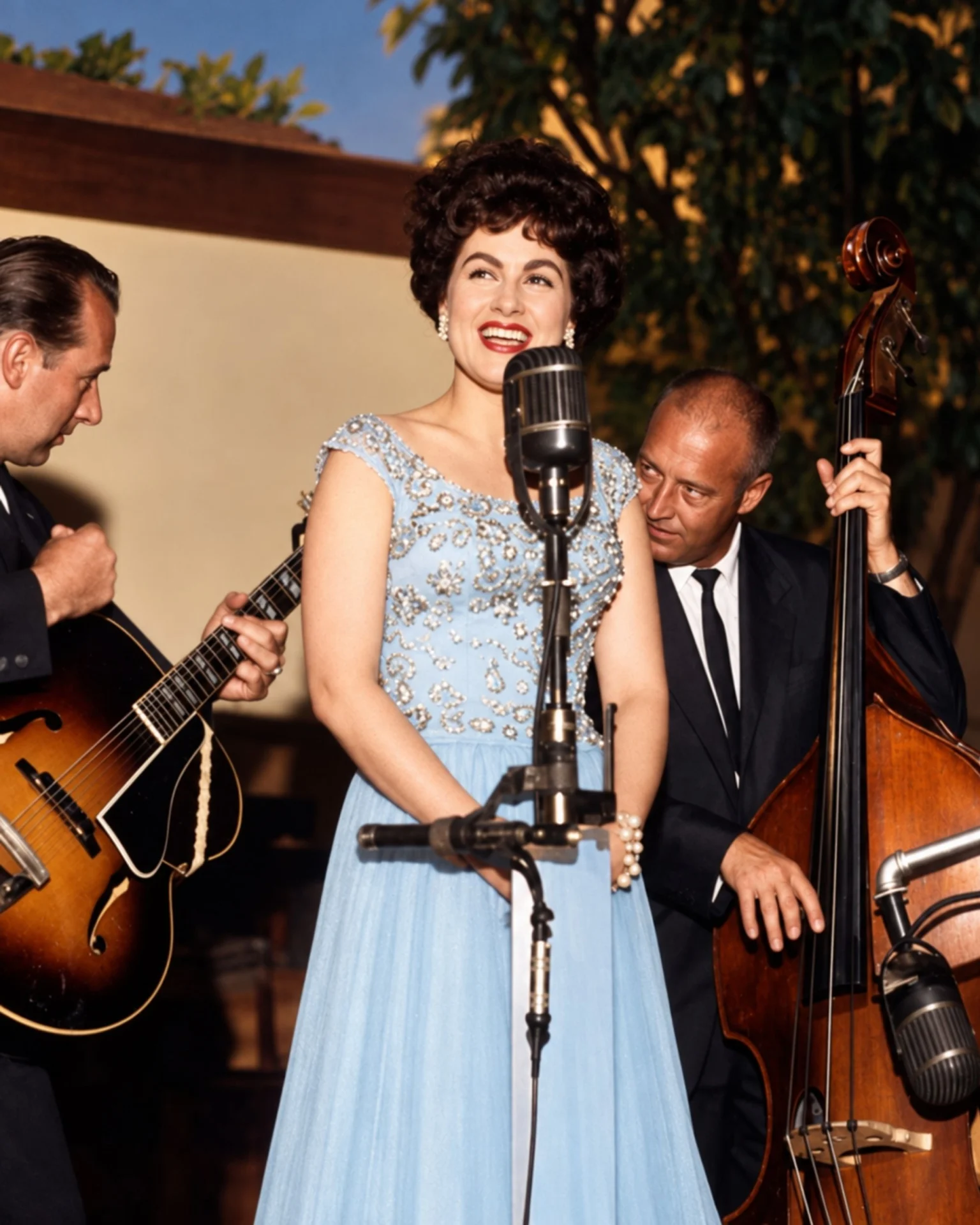
The first take arrived two weeks after Patsy Cline had left the studio wounded and unsure. She had loved Crazy, and she had loved the ache in Willie Nelson’s melody, yet his loose behind the beat phrasing had blocked her path. Then she stopped chasing his timing and let the song bend around her own voice. The vocal they had been waiting for came at once.
By the summer of 1961, Cline had finally broken through with I Fall to Pieces. The success arrived beside a near fatal car wreck that left her badly injured. Her body was still healing when Charlie Dick brought her a song written by Willie Nelson. She recognized its strength immediately, but Nashville had not taught her how to enter a melody that leaned and drifted the way Nelson sang it.
Owen Bradley slowed the arrangement and built a smoother room around her voice. The musicians shaped the track beneath her. Cline tried to reshape the melody while Nelson’s demo still lived in her head. The effort left her caught between his private phrasing and the polished setting Bradley was creating.
Bradley sent her home. He finished the instrumental backing without a final vocal. That choice was not defeat. It was patience.
Two weeks later, Cline returned. She no longer tried to sing Crazy like Willie Nelson. She stretched certain words, tightened others, and turned the melody into something intimate and human. According to the account preserved in Ken Burns’s Country Music, the perfect vocal came on the first take.
She did not need to sound like Willie Nelson to honor the song
Released later that year, Crazy crossed into the pop Top 10 and became one of the recordings most closely associated with Cline. Bradley’s productions with her helped define the smoother Nashville Sound that carried country music toward a broader national audience. The Country Music Hall of Fame still describes their work together as a standard against which female country recordings are measured.
The irony remains beautiful. Nelson wrote the song in a voice Nashville considered unconventional. Cline made history by realizing that she could honor that strangeness by finding her own truth inside it. Her polished voice never sounded untouched. Her heartbreak stayed elegant and bruised.