
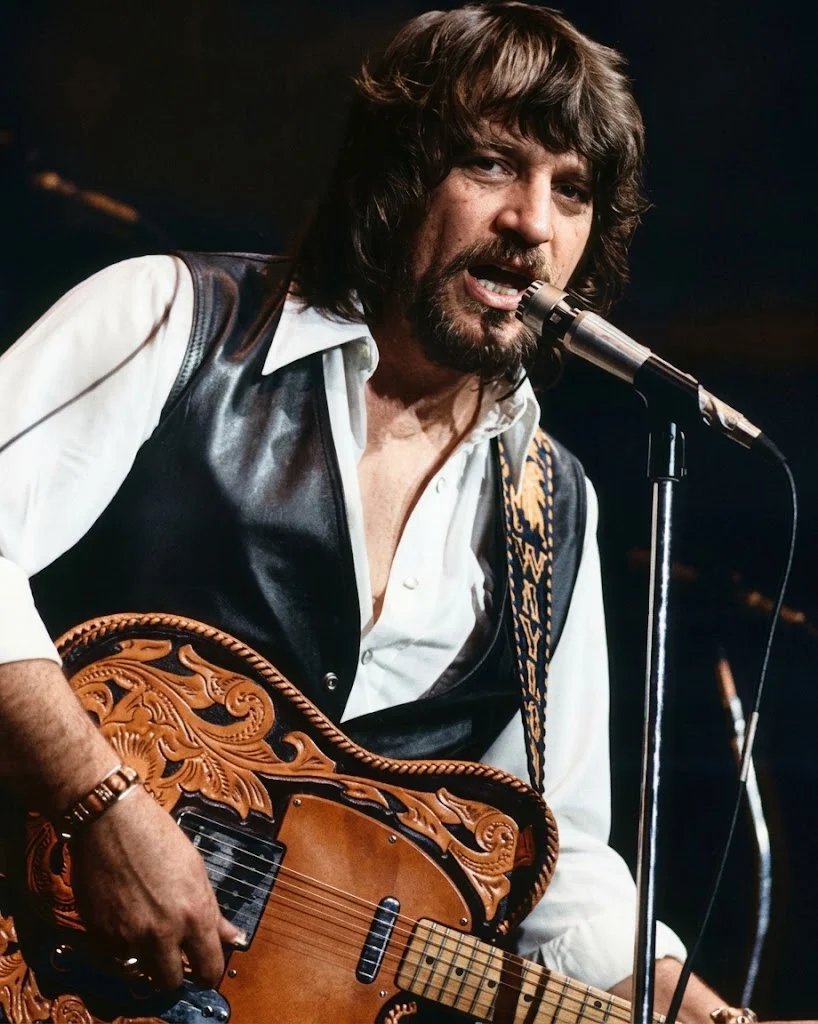
A desperate songwriter cornered a rising country star in a Nashville hallway and threatened a fistfight, yet the moment that mattered came after the guitar spoke.
In the heat of the 1972 Dripping Springs Reunion, Waylon Jennings made a quiet promise to Billy Joe Shaver. He said he would listen. Then Music Row swallowed the promise.
Shaver was living close to ruin and tired of being invisible. He tracked Jennings to RCA Studios in Nashville. There he demanded a hearing. If Waylon refused to listen, the two men would step outside and settle it with their fists.
Jennings could have called security. Instead he answered defiance with defiance. He gave Shaver one song. If the song was bad, he would throw the drifter out himself.
Shaver picked up his guitar and played Willy the Wandering Gypsy and Me. The hallway fight faded. Jennings did not throw him out. He asked for another song and then another. Finally he declared he would record an album built around Shaver’s writing.
That promise became a battle inside RCA. Nashville had polished country into a machine. Strings swelled. Background singers softened the edges. The A-Team played with flawless discipline. Shaver’s songs were different. They carried barroom smoke, highway heartbreak, and unpolished truth.
Label executives saw commercial suicide. Jennings saw a chance to break the formula. With a newly negotiated contract that gave him creative control, he pushed the corporate machine aside.
He kept the executives out of the sessions. He brought in his own road band, The Waylors. Their heavy bass groove matched the grit of the lyrics. The studio became electric and tense, charged by rebellion.
The result was Honky Tonk Heroes, released in 1973. Of its ten tracks, nine were written or co-written by Billy Joe Shaver.
Jennings gave a desperate drifter a voice, and Shaver gave Jennings the poetry that made his outlaw identity feel real.
The album shattered Nashville’s strict formulas. It proved country music could be rough, lived-in, and still reach millions. It became the defining record of the Outlaw Country movement.
Shaver’s breakthrough did not begin in a boardroom. It began when two stubborn men heard the same fire in each other.
One had the courage to demand to be heard, and the other had the power to make the world listen.