
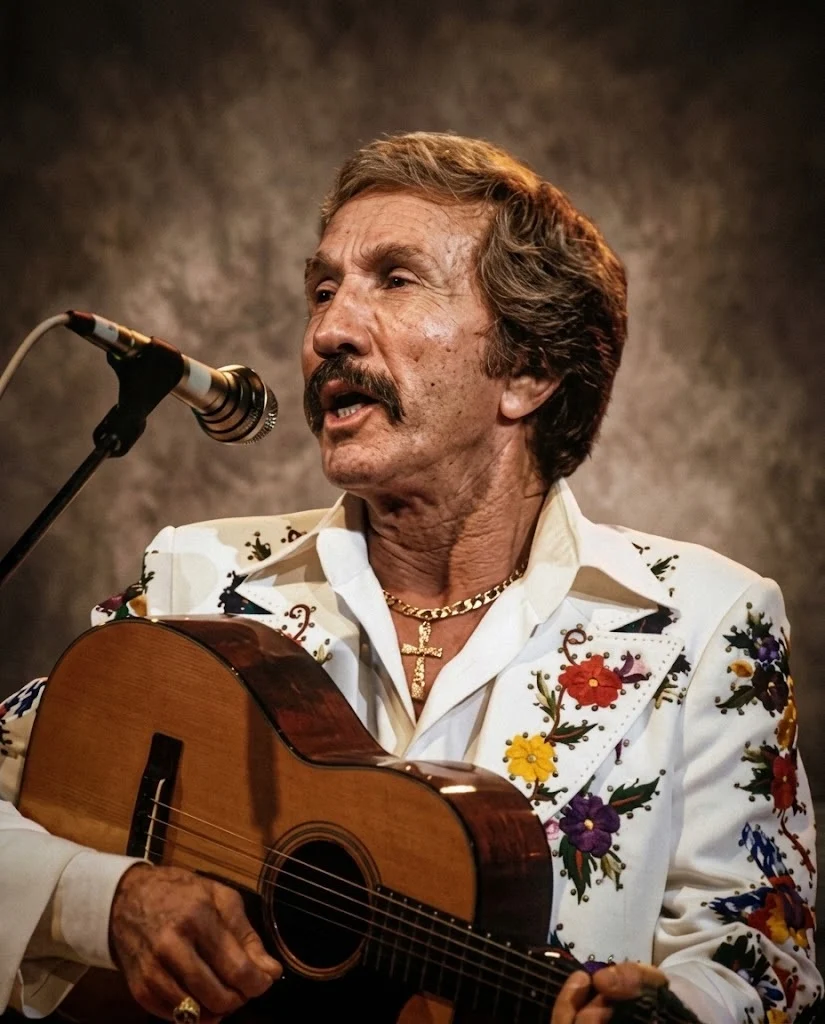
The last song was supposed to be the last song. Then Marty Robbins flashed his half smile, raised one finger again, and the Grand Ole Opry crowd leaned in as if the Opry belonged to them.
During its golden era inside the sweltering Ryman Auditorium, the Opry was a rigidly scheduled live broadcast on WSM’s clear channel radio signal. Artists received exact fifteen minute blocks to perform, read sponsor messages, and leave the stage on time. Robbins rarely respected the clock. He read the room instead.
When his slot ended, he would look into the wings, meet the stage manager’s eyes, and politely signal for one final song. After that song, he would give the same signal and launch into another. Crew members waved clipboards, flashed lights, and pointed at watches. Robbins turned his back to them, faced the cheering pews, and strummed his teardrop guitar.
His overtime sets often reached into Ernest Tubb’s Midnite Jamboree. Tubb’s show was broadcast live from the Texas Troubadour Record Shop. Yet the Texas legend never complained about the borrowed airtime. He waited across town and let his own broadcast begin late. His choice reflected a deeper country code. Brotherhood mattered more than a producer’s schedule.
Robbins knew the people in the wooden pews had saved hard earned money, packed families into station wagons, and driven hundreds of miles to hear him sing. To him, rewarding that loyalty meant far more than keeping a radio network perfectly on time.
No fan should leave the Opry feeling shortchanged.
Those unscripted sets changed the atmosphere of the Opry. Robbins shifted the late night broadcast from a formal radio presentation into a loose intimate concert. He broke the fourth wall, talked directly to fans, took spontaneous requests, and turned the audience into willing accomplices in a harmless weekly heist.
Surviving live recordings capture that shift. They show Robbins stretching “El Paso” into epic ten minute renditions, fumbling lyrics to make the crowd laugh, and sitting at the piano to test brand new material long after WSM expected the next act. The radio logs recorded delay, but the tapes preserved devotion.
Robbins respected the Opry as an institution. Yet he loved the working class people who bought tickets even more. He hijacked national airtime to make sure no fan went home disappointed. His charming rebellion proved that the true magic of country music often happens when the rigid script is finally thrown away.