
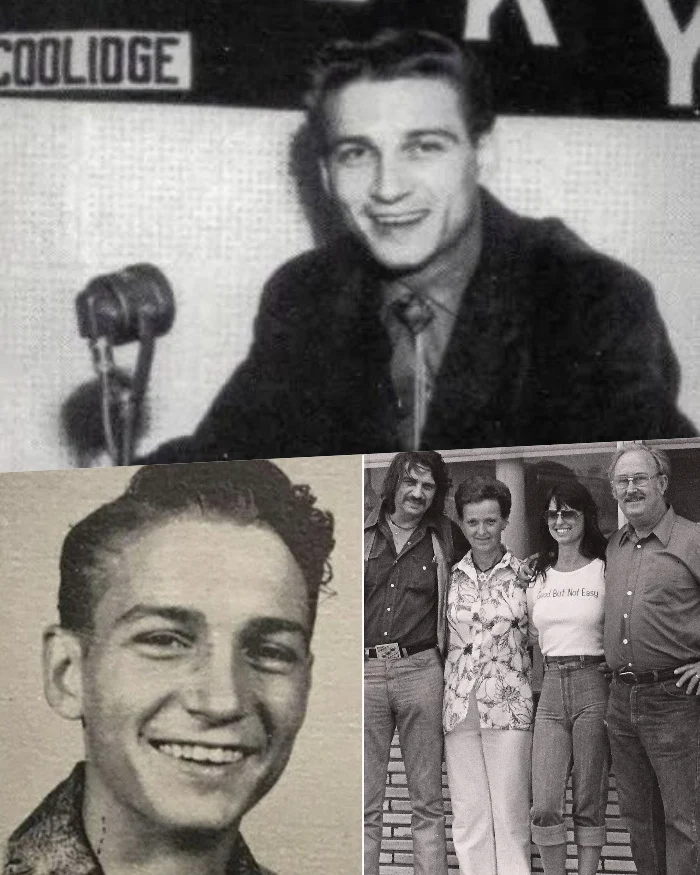
🎙️ The afternoon a twelve-year-old Waylon Jennings lost his first radio job, he did not beg for another chance. He picked up his records and walked out of KVOW in Littlefield, Texas, carrying a stubborn instinct that would later help reshape country music.
In the mid-1950s, KVOW served a quiet cotton-farming community. Jennings had talked his way onto the air despite his age. His boots barely reached the studio floor, yet his hands moved across the turntable with the focus of an experienced broadcaster.
The station expected polite gospel harmonies and traditional country records. Listeners wanted music that hummed softly through West Texas kitchens. Jennings had other plans.
He slid Little Richard into the broadcast queue. The driving piano and unrestrained vocal energy crackled across the airwaves and rattled parlor radios in seconds. The station manager rushed into the booth and demanded an immediate stop. Jennings did not pretend the record was a mistake. He stood by his choice, gathered his discs, and left without a job.
That brief broadcast in West Texas quietly set the tone for everything that followed.
Decades later, the same refusal to bend would bring Jennings to the center of the Outlaw Country movement. By the mid-1960s, he had honed his craft across Texas and Arizona. He worked local dance halls, served as a disc jockey in Lubbock and Phoenix, played bass for Buddy Holly, and survived bitter West Texas winters. He favored sharp rhythmic drive over studio manners.
When he secured an audition with RCA Victor in Nashville, the country music establishment ran sessions like an assembly line. Executive producer Chet Atkins and the label hierarchy selected outside material, assigned in-house studio musicians, and smoothed hard edges with lush strings and background vocal choruses. The Nashville Sound produced reliable hits, but Jennings felt the process drained the energy of a live band.
He pushed back for years. He wanted his own touring rhythm section, The Waylors, inside the studio. The conflict reached a boiling point in the early 1970s as his contract came up for renegotiation. With guidance from manager Neil Reshen, Jennings took a gamble that terrified most Nashville performers.
He threatened to leave RCA Victor unless the label granted him full creative control over song selection, production, and personnel. The result changed Nashville. He stripped away the polish and made Honky Tonk Heroes, an album that helped modern country find its spine.
How a displaced twelve-year-old in Littlefield carried that stubborn creative instinct into the recording studios of RCA Victor remains the chapter where modern country found its spine.