
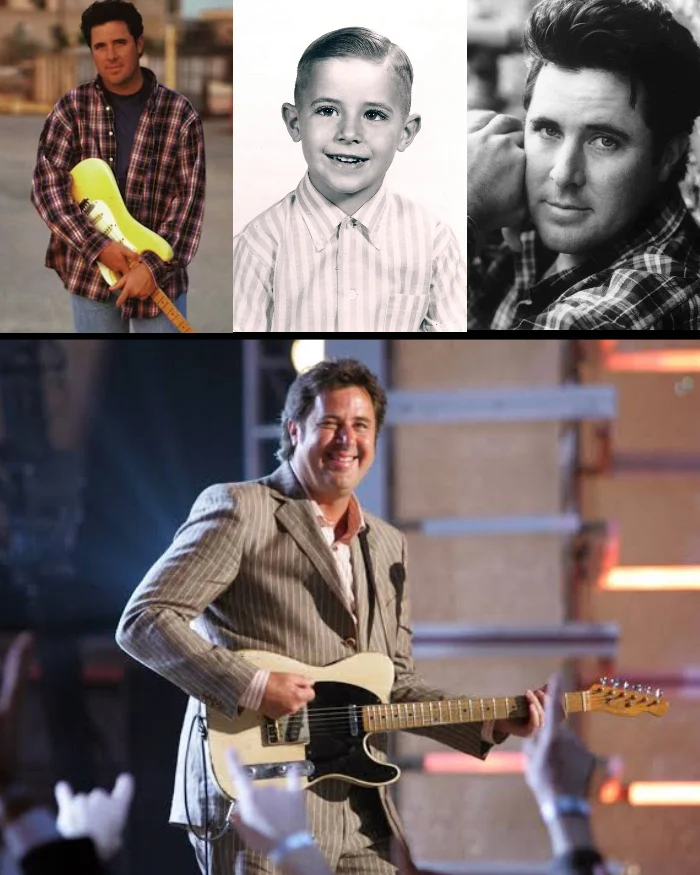
Twenty two Grammy Awards and a place on the Grand Ole Opry stage would later crown Vince Gill as one of the most trusted voices in country music.
Yet the first great fork in his life had nothing to do with fame.
By his senior year at Northwest Classen High School, Gill looked like a young man holding a ticket to professional golf.
His father, Oklahoma administrative law judge J Stanley Gill, had spent years guiding him across neighborhood fairways. The work bore fruit. Gill played at scratch level, collected junior tournament wins, and drew serious collegiate attention. College golf and a future run at the professional tour seemed to line up before him.
Instead of chasing campus fairways, the eighteen year old packed his instruments. He turned down athletic scholarships, set competitive clubs aside, and threw himself into Mountain Smoke, an Oklahoma City bluegrass band he had already gigged with as a teenager.
That move traded financial certainty for five dollar club dates, late night highway drives, and the fragile hope of making music for a living.
He walked away from an elite sports career before it ever started and carried an acoustic guitar into the unknown.
Through the 1970s, he spent years bouncing between transient touring outfits, sleeping in crowded vans, living on empty pockets, and practicing mandolin and flatpicking until sunrise.
The road tested him fast. In the mid 1970s, Mountain Smoke opened an Oklahoma City concert for country rock pioneers Pure Prairie League. The gig paid little, but Gill placed his fast flatpicking and pure high harmony in front of working road musicians who recognized his timing.
Seeking harder training in traditional acoustic music, he headed east to Louisville, Kentucky. He joined the Bluegrass Alliance, a premier testing ground that had sharpened players like Tony Rice and Sam Bush. Gill adapted to the demanding tempos, moving between guitar and mandolin while learning the discipline of tight four part vocal arrangements.
His reputation among bluegrass purists grew, and Ricky Skaggs invited him to join Boone Creek. Working beside Skaggs, Gill soaked up mountain harmonies and precise rhythm picking. Money remained scarce, often barely covering gas and diner meals between weekend dates, yet constant rehearsals gave him an extraordinary technical baseline.
In 1979, the road took a sharp left turn toward southern California. Pure Prairie League had lost frontman Craig Fuller and needed an unmistakable lead vocalist who could also handle lead guitar. Remembering the teenager from Oklahoma, the band tracked Gill down and offered him the lead microphone.
Gill accepted, stepped into the pop country mainstream, and sang lead on their 1980 top ten hit Let Me Love You Tonight. For three albums, he fronted the group through national television appearances and grueling arena tours. Even as the band headlined major venues, he felt constrained by pop radio arrangements and longed to write his own catalog.
In the early 1980s, Gill walked away from the security of a nationally touring rock band and moved his young family to Nashville with no recording contract in hand.
He took work wherever an instrument was needed, playing utility guitar and singing high background vocals for artists like Rosanne Cash, Rodney Crowell, and Emmylou Harris.
Those studio sessions established him as one of the most dependable sidemen on Music Row. Producers knew that if a track needed an intricate acoustic intro, a searing electric solo, or a clean harmony above the chorus, Gill could cut it on the first take.
His versatility caught the attention of Mark Knopfler, who invited him to join Dire Straits as a full time touring guitarist. Gill declined the lucrative international offer, convinced that his future lay in writing his own material in Tennessee.
That gamble paid off when Tony Brown signed him to MCA Nashville in 1989. After years of near miss singles on previous labels, Gill released When I Call Your Name, a sorrowful ballad that swept the country charts and earned him his first Grammy Award.
The teenager who turned his back on country club fairways had finally found his footing. It took fifteen years of van rides, bluegrass festivals, rock tours, and session work, but every highway mile had served a purpose, building the steady hand that would carry country music through the decade that followed.