
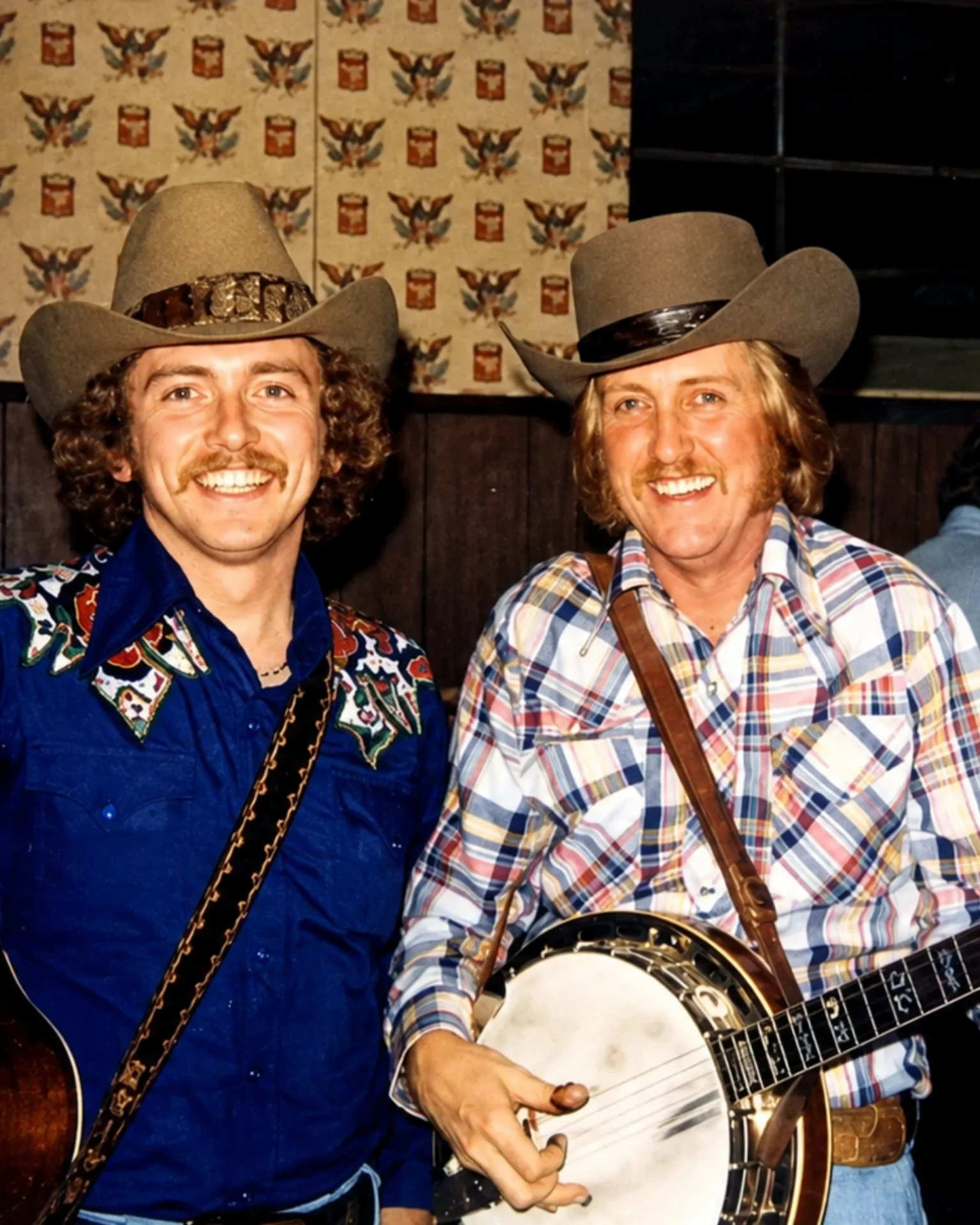
Some of his biggest country records reached No. 1 after he was already gone, a cruel ending for a singer who had spent years fighting for Nashville to hear a voice bluegrass already treasured.
Bluegrass already knew the voice and Keith Whitley still wanted Nashville.
Keith Whitley died on May 9, 1989, at thirty-four. After his death “I Wonder Do You Think of Me” was released and went to No. 1 and “It Ain’t Nothin’” did the same, even though he was no longer there to hear them on country radio.
A Respected Voice Looking Beyond Bluegrass
By the late 1970s Whitley was no longer the Kentucky teenager who had once sung Stanley Brothers songs with Ricky Skaggs. He had worked with Ralph Stanley, spent years on bluegrass stages and later joined J.D. Crowe & the New South. Inside that world Keith did not need an introduction because musicians already knew the voice.
But he kept looking toward country music and he told J.D. Crowe that singing country had always been the goal. Staying in bluegrass would have been the safer choice, yet he began stepping away from the career he had already built and moved toward Nashville where none of that reputation guaranteed a record deal.
The Long And Unglamorous Wait On Music Row
The next stretch was much less glamorous. Keith sang demos, searched for songs and waited for somebody on Music Row to believe the voice could work beyond bluegrass until RCA finally signed him in 1984.
Even then the breakthrough came slowly. L.A. to Miami put “Miami, My Amy” and “Ten Feet Away” and “Homecoming ’63” on country radio. The records were moving in the right direction, but Keith was unhappy with some of the polished production around them because he wanted something closer to the hard country he had crossed genres to sing in the first place.
The Sound That Finally Set Him Free
So the next album changed course. With Don’t Close Your Eyes in 1988 the voice moved forward and the production got out of its way. “Don’t Close Your Eyes” went to No. 1, then “When You Say Nothing at All” followed and then “I’m No Stranger to the Rain” made it three straight.
Ricky Skaggs had reached country stardom years earlier. Keith had needed longer to get there after leaving bluegrass, starting again and spending years trying to make Nashville hear what other musicians had heard much earlier.
He left the safer road behind and waited until the records finally sounded like the man singing them.
His story remains powerful because the dream was never handed to him. He earned respect in one world, risked it for another and found his true country sound just before his time ran out, leaving behind a voice that kept reaching No. 1 even after May 9, 1989.